
Hedging guide · Prices checked October 2026
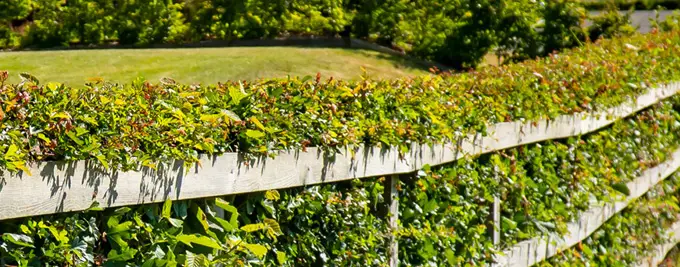
A mixed native hedge combines several British hedgerow species, such as hawthorn, blackthorn, hazel and field maple, in one boundary. The mix gives you flowers, berries, autumn colour and shelter for wildlife, and it is tougher than a single-species hedge.
This guide explains what is in each of our native hedge mixes, which mix suits which job, how many plants you need per metre and what it costs.
Written by Gwynne Bodsworth, grower at our 14-acre family-run nursery in Dedham, Essex.
Which native hedge mix should I choose?
Start with where the hedge is going and what it needs to do.
| Mix | Best for | Thorns? | Bare root from (per metre) |
|---|---|---|---|
| Field Wildlife | Field and farm boundaries, stockproof wildlife hedges | Yes | £6.60 |
| Garden Wildlife | Wildlife-friendly garden boundaries with flowers and berries | Yes | £7.60 |
| Horse Safe | Paddocks and fields with horses or livestock | Hawthorn only | £7.95 |
| Thornless | Family gardens, paths and play areas | No | £7.95 |
| Green & Purple Beech | A formal, colourful native-style hedge | No | £10.50 |
| Countryside Stewardship BN11 | Farmers planting under Countryside Stewardship | Yes | £8.00 |
| Instant CountryHedge | An established native hedge from day one | Yes | £139.95 (instant unit) |
What is in each native hedge mix?
All our mixes use native British hedgerow species. The exact proportions can vary slightly with what is available each season, but the species stay the same.
Field Wildlife Hedging Mix
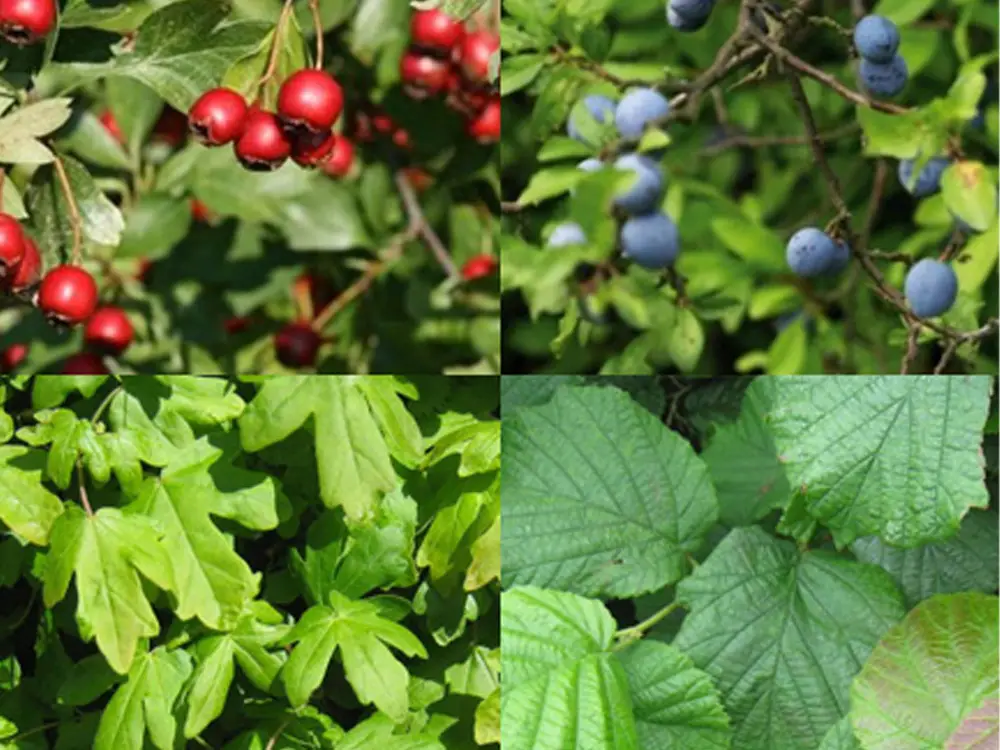
Hawthorn (Crataegus monogyna), Blackthorn (Prunus spinosa), Field Maple (Acer campestre) and Hazel (Corylus avellana).
The classic British field hedge. Hawthorn and blackthorn make it thick and thorny enough to keep livestock in, while hazel and field maple fill it out and add autumn colour.
Garden Wildlife Hedging Mix
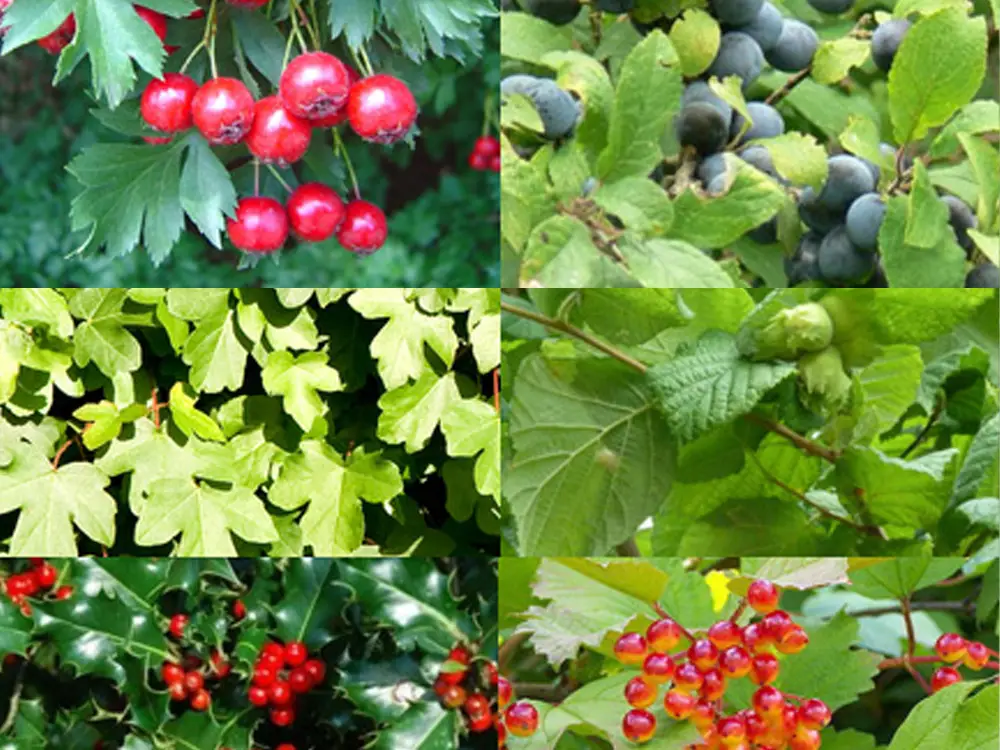
Hawthorn, Blackthorn, Field Maple and Hazel, plus Holly (Ilex aquifolium, supplied at 20–30cm), Dog Rose (Rosa canina) and Guelder Rose (Viburnum opulus).
More variety for a garden: spring blossom, summer roses, red berries and hips in autumn, and evergreen holly for some winter cover.
Horse Safe Hedging Mix
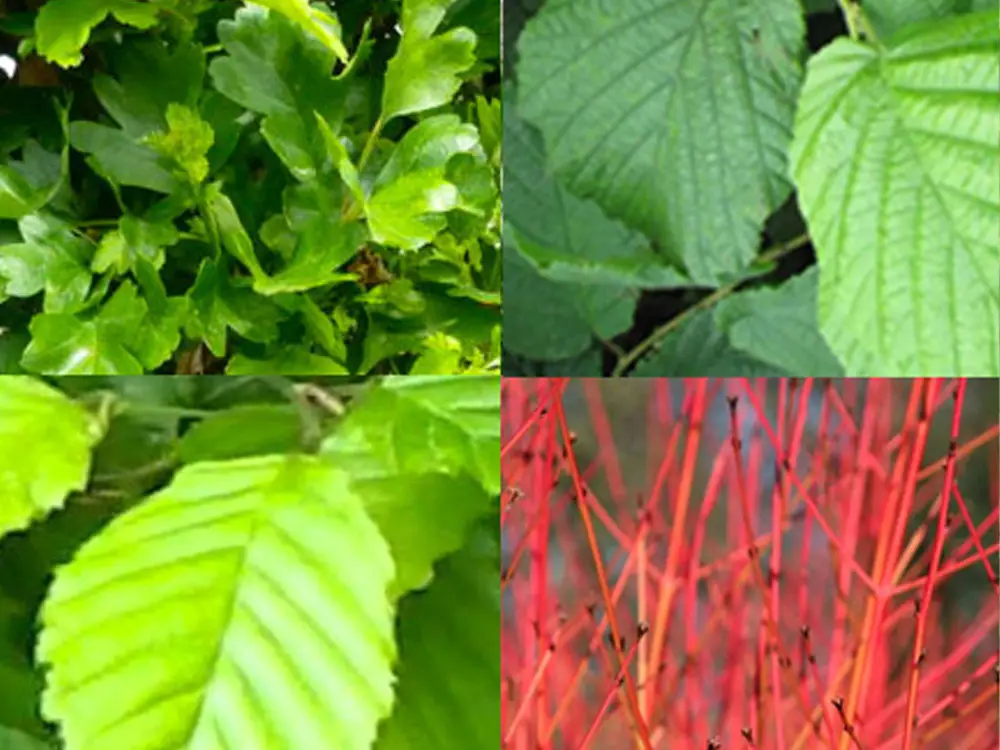
Hawthorn, Hazel, Mixed Dogwood (Cornus sanguinea, Cornus alba ‘Sibirica’ and Cornus stolonifera ‘Flaviramea’) and Guelder Rose.
Put together for paddock and field boundaries. Unlike our other wildlife mixes it leaves out blackthorn and holly. Keep livestock at least 2 metres away from the new hedge until it is established.
Thornless Hedging Mix
30% Field Maple, 20% Hazel, 20% Guelder Rose, and 10% each of Common Dogwood, Red-stemmed Dogwood and Yellow-stemmed Dogwood.
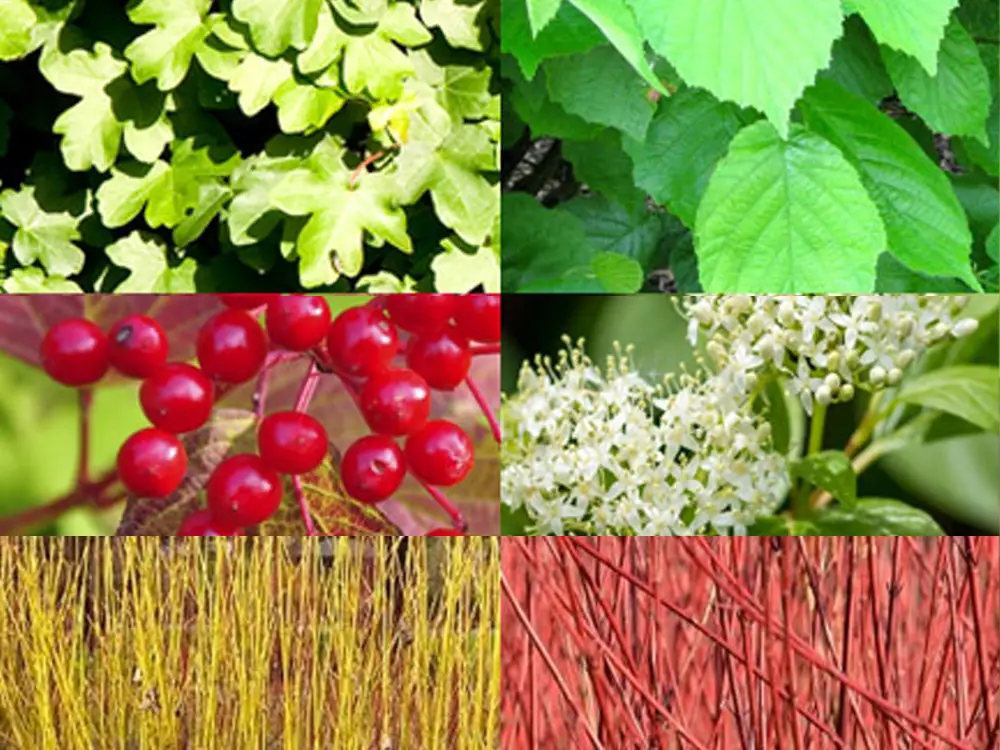
A soft, thorn-free native hedge for gardens with children, pets or busy paths. The dogwoods give bright red and yellow winter stems.
Instant CountryHedge
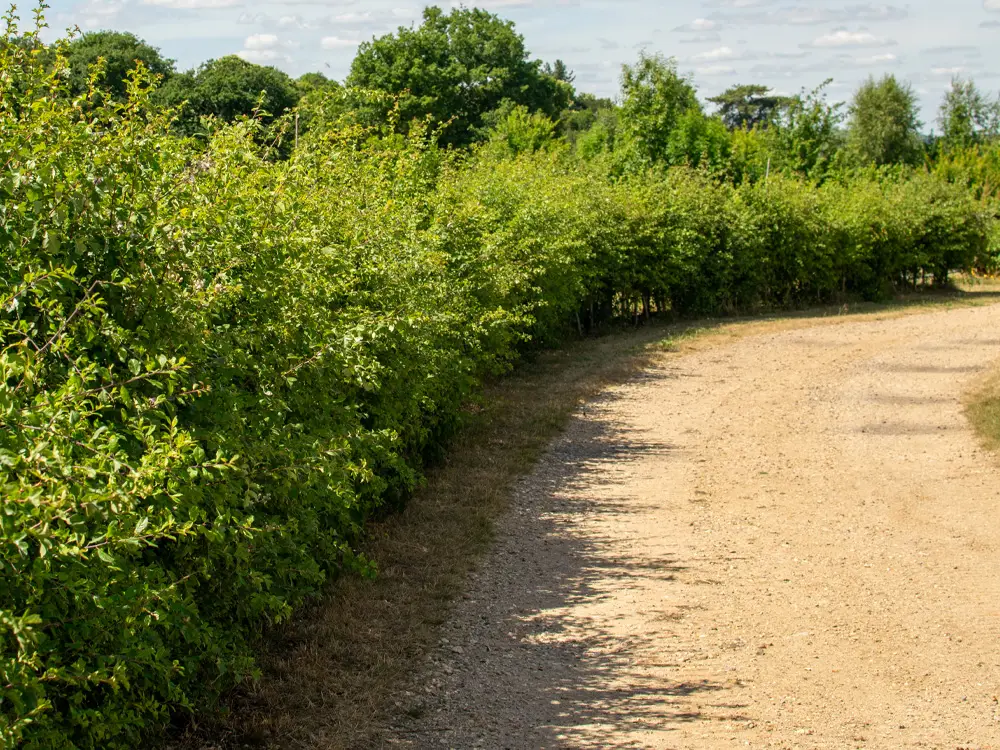
A random mix of Hawthorn, Blackthorn, Field Maple, Hazel, English Holly, Dog Rose, Guelder Rose, Hornbeam and mixed Dogwoods, pre-grown into 1 metre wide units.
For when you want a native hedge that looks established from day one. Each unit is grown in compost with enough feed for the first 12 months after planting.
Also available: the Green and Purple Beech Hedging Mix (about 75% green beech and 25% purple beech) for a colourful formal hedge, and the Countryside Stewardship BN11 mix for grant-funded farm planting (see the FAQs below).
How many plants per metre for a native hedge?
Our native mixes are sold in 1 metre packs of 5 plants. Plant them in two staggered rows, 30cm apart, with the plants 40cm apart along each row, mixing the species as you go.
A staggered double row gives a wider, denser base. That matters for a wildlife or stockproof hedge, where you want it thick right down to the ground. The BN11 mix is supplied at 6 plants per metre to meet the Countryside Stewardship specification.
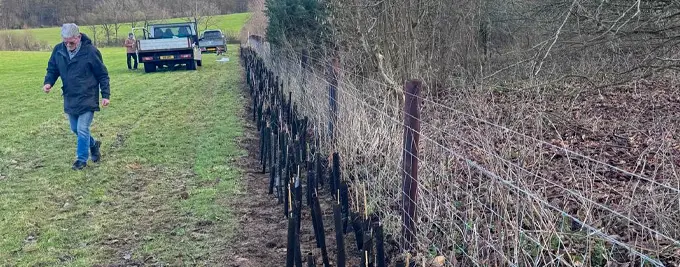
For ground preparation and planting step by step, see our native mixed hedging care guide.
How much does a mixed native hedge cost?
Native mixes are priced per metre (5 plants). Bare root is by far the cheapest way to plant one. These are single-metre prices; packs of 10 to 200 metres bring the price down.
| Mix (bare root) | 40–60cm | 60–90cm | 90–120cm |
|---|---|---|---|
| Field Wildlife | £6.60 | £7.80 | £10.25 |
| Garden Wildlife | £7.60 | £9.35 | £13.75 |
| Horse Safe | £7.95 | £9.45 | £13.95 |
| Thornless | £7.95 | £9.95 | £13.95 |
| Green & Purple Beech | £10.50 | £14.95 | £19.95 |
Prices checked October 2026. For example, the Garden Wildlife Mix at 40–60cm falls from £7.60 a metre to £6.46 a metre in a 200 metre pack, and the Field Wildlife Mix to £5.61 a metre.
Worked example: a 30 metre garden wildlife hedge
30 × 1 metre packs = 150 plants. At 40–60cm that is 30 × £7.60 = £228, or buy a 20 metre pack plus 10 single metres for less.
Pot grown versions of the Field and Garden Wildlife mixes are available all year, from £32.50 a metre. Our bare root hedging cost guide explains how bare root compares on price.
When should you plant a native hedge?
Native mixes are mostly sold bare root, which means planting while the plants are dormant. Our bare root season normally starts in the first week of November and runs until March or April, depending on the weather. Bare root mixes can be pre-ordered now.
Plant whenever the ground isn’t frozen or waterlogged. If you need to plant in spring or summer, choose a pot grown mix or Instant CountryHedge instead.
Farmers, landscapers & larger projects
Planting a long native hedge?
We supply native hedging by the metre or by the kilometre. Send us your length and species and we’ll quote within 24 hours, for any quantity. Custom mixes are available on request.
Native hedging FAQs
What hedges are native to the UK?
Common native UK hedging plants include hawthorn, blackthorn, hazel, field maple, holly, dog rose, guelder rose, hornbeam, beech, dogwood and spindle. Hawthorn is the backbone of most British hedgerows.
What is the best native hedge for wildlife?
A mix of several species is best, because it gives flowers, berries, nuts and shelter at different times of year. Our Garden Wildlife Mix combines hawthorn, blackthorn, field maple, hazel, holly, dog rose and guelder rose for exactly that reason.
Is there a native hedge mix without thorns?
Yes. Our Thornless Mix uses field maple, hazel, guelder rose and three dogwoods, so it is safe for gardens with children, pets or busy paths.
Which native hedge is safe for horses?
Our Horse Safe Mix is made up of hawthorn, hazel, mixed dogwoods and guelder rose, and leaves out blackthorn and holly. Keep horses and other livestock at least 2 metres away until the new hedge is established.
What is a BN11 hedging mix?
BN11 is the Countryside Stewardship hedgerow planting specification. Our BN11 mix uses UK-provenance native species, with no single species making up more than 70% of the mix, supplied at 45–60cm and 6 plants per metre from November to March. Please send a copy of your scheme agreement with your order.
When should you cut a native hedge?
Avoid cutting during the main bird nesting season, from March to August. Late winter, in January or February, is ideal because birds have had the chance to eat the berries over winter.