
Topiary Plants
Add shape, height and structure to your outdoor space with our range of topiary plants. Choose from topiary globes, cones and trained topiary trees, available to buy directly from our established family-run nursery for retail, trade and commercial projects across the UK.
From topiary balls and cones to topiary trees and half standards, we have the perfect topairy plants for any setting in your garden.
Shop topiary plants, including globes, cones and topiary trees. Buy direct from our established family-run nursery for gardens and projects across the UK.
- Price From £94.95 Shop Now This product has multiple variants. The options may be chosen on the product page
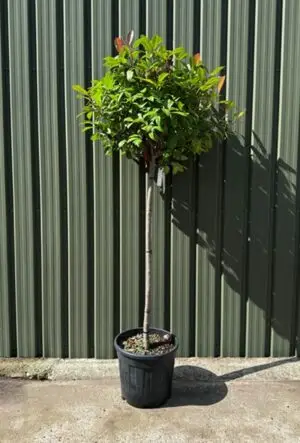
The Photinia Red Robin Half Standard Topiary Tree is a true masterpiece. This hand-selected, premium tree has been expertly trained into a half standard topiary.
 Price From £85.00 Shop Now This product has multiple variants. The options may be chosen on the product page
Elevate the charm of your outdoor areas with minimal effort. These yew topiary balls provide a quick and stunning way to boost the appeal of your garden, without requiring extensive...

Buy Topiary Plants Direct from the Nursery
Topiary plants provide an established garden feature from the moment they are positioned. Their clipped shapes can be used to frame an entrance, create a focal point, introduce structure to a border or add greenery to a patio and paved area.
Our collection includes traditional topiary balls, which are also commonly described as topiary globes, along with cones and trained topiary trees. Different sizes and species are available to suit formal gardens, contemporary spaces, domestic planting and larger landscaping projects.
We supply retail, trade and commercial customers. Browse the topiary categories above or contact our nursery team if you need help choosing a suitable shape, species or size for your project.
What Are Topiary Plants?
Topiary is the practice of clipping and training trees or shrubs into defined shapes.
Some plants are trained close to the ground to create balls, globes, cones and pyramids. Others are grown with a clear stem and shaped head, producing a topiary tree or half-standard form.
Ready-shaped topiary provides an immediate feature, but it still needs regular care. New growth must be trimmed periodically to preserve the outline, and plants grown in containers require particular attention to watering and feeding.
Explore Our Topiary Shapes
Topiary Globes and Balls
Topiary globes create a rounded, balanced shape that works well in both formal and informal gardens. They can be planted individually, arranged in repeating groups or positioned as a matching pair.
Smaller topiary balls are useful in pots, raised beds and low borders. Larger specimens can be used as permanent focal points or to introduce structure among looser planting.
The terms topiary globe and topiary ball are often used for the same rounded form. Browse our dedicated Topiary Balls category to compare the available species and sizes.
Topiary Cones
Topiary cones provide more height than a ball while retaining a compact footprint.
Their tapered shape makes them well suited to entrances, patios, paths and formal borders. A matching pair can be placed on either side of a doorway or gate, while a row of cones can create repetition and guide the eye through a garden.
Check both the total height and the width before ordering, particularly when positioning a cone in a container or restricted space.
Topiary Trees and Half Standards
Topiary trees have a clear stem with a trained head of foliage above. They are sometimes described as standards, half standards or lollipop trees, depending on their proportions and stem height.
This form adds height without filling the planting space from ground level. It can be used beside entrances, within borders, along paths or as a feature on a patio.
Topiary tree varieties can be evergreen or deciduous. Check the individual product information carefully if year-round foliage is important.
Ways to Use Topiary Plants
Frame a Doorway or Entrance
A matching pair of topiary plants can create a clear, balanced entrance to a home, garden, driveway or commercial property.
Cones and topiary trees are particularly effective for this purpose because their upright forms add height without requiring a wide planting area.
When using containers, make sure the pots are sufficiently large and heavy to support the plants, especially in an exposed position.
Add Structure to Borders
Topiary globes and cones can provide permanent structure within a mixed border.
Their clipped outlines contrast well with flowering shrubs, grasses, perennials and plants with softer or less formal growth. Repeating the same shape at intervals can also help connect different sections of a planting scheme.
Create a Patio or Container Display
Many topiary plants can be grown in suitable containers, making them useful for patios, courtyards and paved gardens.
The container must have drainage holes and enough room for the root system to develop. Plants in pots dry out more quickly than those in the ground, so they require regular checks and thorough watering.
Introduce a Formal Feature
Topiary is traditionally associated with formal gardens, parterres and symmetrical planting, but it can also be used as a contrasting feature in a less structured space.
A single large globe or cone can provide a central focal point, while matching plants can be used to create repetition along a path or boundary.
Choosing the Right Topiary Plant
Consider the Shape
Choose a shape that suits both the available space and the effect you want to create.
Globes have a broad, rounded form and work well close to the ground. Cones introduce height while remaining relatively narrow. Topiary trees provide a raised head of foliage above a clear stem.
Remember that the plant will continue growing. Allow enough space to trim around the complete shape without obstructing paths, doors or neighbouring plants.
Check the Eventual Size
Product dimensions may refer to the current plant height, the diameter of a globe, the height of a cone or the stem and head of a topiary tree.
Read the size information carefully so you understand what is included in the stated measurement. The current container size can also give useful information about the overall scale and handling requirements of the plant.
Choose a Suitable Species
Different species vary in foliage, growth rate, preferred conditions and response to clipping.
Depending on availability, evergreen topiary choices may include Box, Yew and Euonymus. Trained tree forms may include plants such as Photinia, Bay, Willow and Hydrangea.
Not every topiary plant is evergreen. Check the individual product page for its foliage, planting position, expected growth and maintenance requirements.
Check the Planting Position
Before ordering, consider the amount of sun, exposure, soil conditions and space available.
Some species tolerate a wider range of conditions than others. The correct choice should be based on the requirements of the particular plant rather than assuming that every topiary variety prefers the same position.
Planting Topiary in the Ground
Prepare the Planting Area
Remove weeds, grass, old roots and debris from the planting position.
Dig a hole wider than the plant’s root system but no deeper than necessary. The top of the root ball should sit approximately level with the surrounding soil once planted.
Loosen compacted soil around the base and sides of the hole to help the roots move into the surrounding ground. Avoid planting where water remains around the roots for long periods.
Improve the Soil with Hedge Planting Compost
Where the existing soil would benefit from additional organic matter, mix Hedge Planting Compost with the excavated soil before backfilling.
Our peat-free Hedge Planting Compost is intended as a soil conditioner and improver. Mix it with the existing soil rather than filling the entire planting hole with compost alone.
Hedge Planting Compost is most appropriate when planting topiary into the ground. For topiary being moved into a container, use a suitable container-growing compost selected for the plant species.
Apply Rootgrow When Planting
Rootgrow mycorrhizal fungi can be applied when planting topiary in the ground.
Follow the quantities and application method shown on the packaging. Rootgrow must come into direct contact with the roots, so apply it immediately before positioning the plant rather than mixing it generally through all the backfill soil.
Rootgrow is used at the planting stage and does not replace correct planting, suitable soil or regular watering.
Position and Backfill the Plant
Remove the container and gently inspect the root system. If roots are tightly circling the outside of the root ball, carefully loosen the outer roots before planting.
Place the plant upright and check its position from several directions. This is particularly important with cones and topiary trees, where a slight lean will be noticeable.
Backfill around the root system with the prepared soil, firming gently to remove large air pockets. Water thoroughly after planting.
Planting Topiary in Containers
Choose a frost-resistant container with adequate drainage holes. It should be wide and heavy enough to support the plant as its foliage grows and catches the wind.
Use a suitable container compost rather than filling the pot with garden soil or Hedge Planting Compost alone. Leave enough space below the rim to allow the plant to be watered thoroughly.
Position the top of the existing root ball at approximately the same level it was growing previously. Do not bury the lower stem.
Raise the container slightly on pot feet where appropriate so excess water can drain freely. Larger topiary trees in exposed positions may also require temporary support.
Watering and Irrigation
Newly planted topiary must be watered thoroughly while its roots establish.
Direct the water towards the soil and root area rather than only wetting the foliage. Dense topiary shapes can prevent light rainfall from reaching the compost or soil beneath the plant.
Container grown topiary requires especially careful monitoring because pots can dry quickly during warm, dry or windy weather. Check the compost regularly rather than relying on a fixed watering schedule.
A porous pipe or drip irrigation system can make watering easier where several topiary plants are arranged along a border, path or commercial frontage. Position the irrigation close to the root areas and check that every plant receives water evenly.
Avoid leaving the roots permanently saturated. The correct watering frequency will depend on the plant, container size, soil, weather and planting position.
Protecting Topiary from Rabbits
Rabbit protection may be needed where topiary is planted in rural gardens, open landscapes or other areas with grazing pressure.
Rabbits can damage young stems, bark and lower foliage. Suitable guards may protect individual stems, while temporary rabbit fencing may be more practical around larger topiary plants or groups.
Make sure guards do not rub against the bark, trap excessive moisture or become tight as the stem develops. Check and adjust them regularly.
Topiary planted in raised containers is less likely to need rabbit protection, although local conditions should always be considered.
Feeding Topiary After Planting
Hedge Feed can be used as part of the aftercare for topiary planted in the ground.
Apply it over the soil around the root area, following the instructions and application rate on the packaging. Keep concentrated granules away from direct contact with the stem and water the area after application.
Do not exceed the recommended quantity. Additional feed will not compensate for insufficient watering, compacted soil or poor drainage.
Topiary grown permanently in pots may require a feed specifically suited to container plants. Follow the requirements of the individual species and the directions supplied with the selected fertiliser.
How to Trim Topiary Plants
Regular light trimming helps topiary retain its intended shape and encourages a denser outline.
The correct timing and frequency depend on the plant species and its growth rate. Slower-growing plants may need only a small amount of annual maintenance, while more vigorous plants may require additional trimming during the growing season.
Use sharp, clean tools and remove small amounts at a time. Step back frequently and inspect the plant from different angles to keep the shape even.
Avoid severe cutting during unsuitable weather or removing growth beyond the point from which the particular species can recover. Check species-specific pruning advice before making substantial changes.