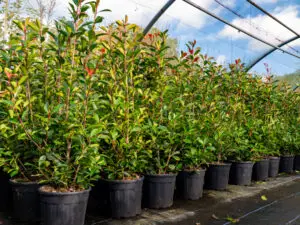
Is Pittosporum Suitable for My Garden?
Pittosporum is not the right hedge for every site. Before ordering, consider your local climate, exposure, soil and the individual requirements of the variety.
Milder and Sheltered Locations
Pittosporum is generally most successful in milder parts of the UK and in positions protected from severe cold and harsh winter winds.
A sheltered garden, courtyard, town garden or position near a protective wall may be more suitable than an exposed inland site. Some cultivars are hardier than others, so check the individual product information rather than applying one hardiness rating to the complete range.
In colder locations, consider whether another evergreen hedge would be more dependable before placing a large order.
Sun or Partial Shade
Many Pittosporum plants grow well in full sun or partial shade.
A sunny position can help coloured and variegated foliage show more strongly, although the precise requirement varies between cultivars.
Deep shade may result in less dense growth and weaker foliage colour. Check how much direct light the planting position receives throughout the year, particularly where walls, fences or buildings cast seasonal shade.
Free-Draining Soil
Pittosporum generally performs best in reasonably fertile, free-draining soil.
Avoid planting where water regularly collects around the roots. Heavy or compacted soil may need preparation before planting, but adding compost alone will not correct serious drainage problems.
The soil should retain enough moisture to support the hedge while allowing excess water to drain away.
Exposed and Coastal Positions
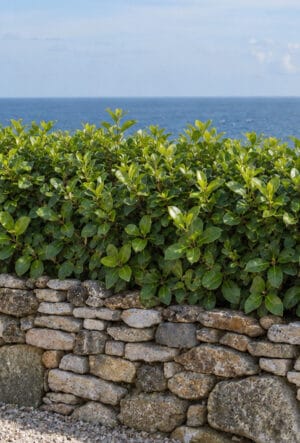
Some Pittosporum varieties can be suitable for coastal gardens, but exposure varies greatly between sites and cultivars.
A coastal position protected by buildings or other planting is different from an open boundary exposed to strong salt-laden winds. Check the individual variety and consider local conditions before relying on Pittosporum as a windbreak.