
Hedging care & growing guide
Hazel Hedge Care Guide: Planting, Spacing & Pruning
Hazel is a hardy, deciduous native hedge that is straightforward to establish when it is planted at the correct depth, kept watered through its first growing season and pruned while young to encourage dense growth from the base. If you are still choosing plants or sizes, see our Hazel hedging plants.
This guide covers when and where to plant Hazel, the correct spacing for our current bare-root and pot-grown sizes, watering, feeding, pruning, growth rate, seasonal care and the common reasons a Hazel hedge may become sparse, yellow, brown or slow to establish.
Hazel, Corylus avellana, is deciduous, so it will lose its leaves in autumn. Its early catkins, dense branching and later nuts make it particularly valuable in native, informal and wildlife-focused hedging.

Expert nursery advice
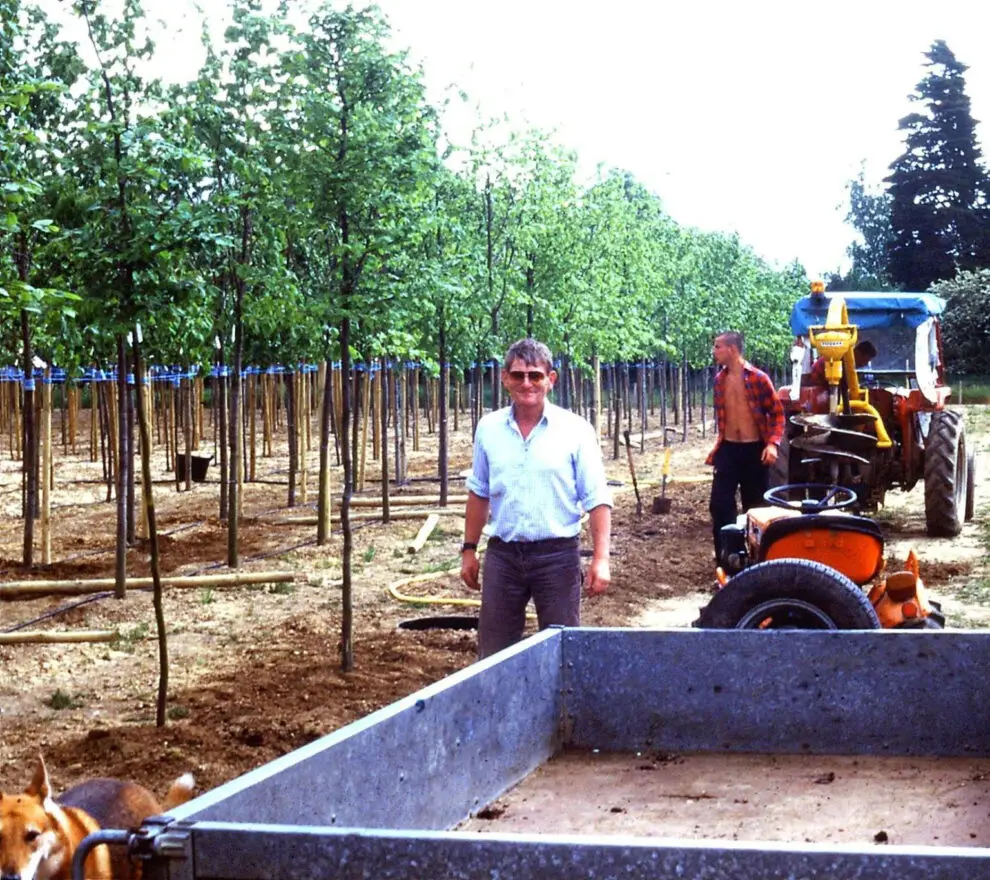
Gwynne's Grower's Tip
For Hazel, I would put good establishment ahead of feeding. Prepare a weed-free planting line, make sure the roots are never allowed to dry out and water thoroughly after planting. During the first growing season, keep checking the soil around the original root system rather than judging moisture from the surface alone. A light formative prune while the hedge is young will encourage low, bushy growth and usually gives a better long-term hedge than allowing the plants to race upwards from the start.
From our nursery
Visit our Hazel hedges

Hazel Hedge
Hazel is a particularly good choice where you want a native, natural-looking hedge with strong wildlife value rather than year-round evergreen screening. Bare-root plants suit longer planting runs during the dormant season, while pot-grown Hazel gives more flexibility over planting time. Whichever format you choose, allow enough room for its naturally vigorous habit and prune young plants to encourage growth close to the base.
Not sure which Hazel hedge to choose?
Compare the available plants, formats and starting sizes in the complete range.
Explore our complete Hazel hedging rangeHazel hedge quick-care summary
| Botanical name | Corylus avellana |
|---|---|
| Plant type | Native large shrub / small tree used for hedging |
| Evergreen or deciduous | Deciduous |
| Typical growth rate | Around 20–40cm per year once established |
| Preferred position | Full sun to partial shade; tolerates some shade |
| Soil | Fertile, moist but well-drained soil |
| Watering | Water well during establishment and prolonged dry spells |
| Pruning period | Main formative or renovation pruning in late winter |
| Feeding | Spring feed if required; mulch annually |
| Hardiness | Very hardy, RHS H6 |
| Typical hedge height | Commonly maintained around 1.5–4m; taller if required |
| Planting season | Bare root Nov–Apr; pot grown year-round in suitable conditions |
| Root types commonly available | Bare root and pot grown |
About Hazel hedging
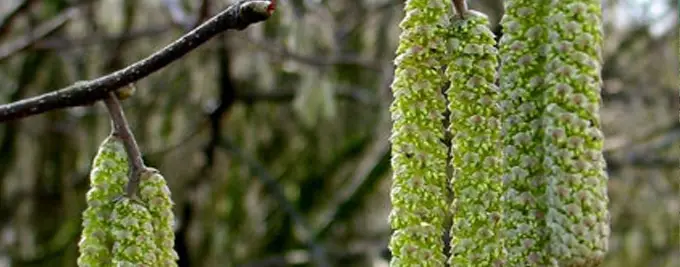
Hazel, Corylus avellana, is a native deciduous shrub or small tree that forms a vigorous, informal hedge with broad green leaves, yellow autumn colour, winter catkins and, where pollination and management allow, hazelnuts.
Common Hazel, Corylus avellana, is a native deciduous member of the birch family. It naturally develops into a broad, multi-stemmed shrub or small tree and responds well to regular pruning, hedge laying and coppicing, which makes it particularly useful for substantial native boundaries.
The rounded green leaves provide good summer cover before turning yellow in autumn and falling. Long male catkins become conspicuous before the new leaves emerge, while much smaller female flowers can develop into hazelnuts after wind pollination.
Hazel is particularly well suited to informal country-style hedges, wildlife boundaries, native planting schemes and larger gardens. Because it is deciduous, it should not be chosen where dense evergreen screening throughout winter is essential.
We currently offer one main Hazel Hedge product in bare-root and pot-grown formats, with several plant sizes and planting densities.
Choosing the right Hazel hedge
Hazel suits native, wildlife-friendly and relatively substantial informal hedges particularly well. It tolerates a useful range of soils and light levels, but it is deciduous, naturally broad and less suitable where year-round screening, very formal clipping or severe salt exposure is the priority.
Where Hazel works particularly well
- Native and wildlife hedging: Hazel provides foliage, shelter, early pollen and later nuts.
- Informal boundaries: its naturally branching habit suits rural, cottage and naturalistic planting.
- Taller hedges: Hazel has enough vigour to create a substantial boundary where there is room for it to develop.
- Mixed light: it grows well in sun and partial shade and can tolerate some additional shade, although stronger light generally favours flowering and nut production.
- Native mixed schemes: Hazel combines naturally with species such as Hawthorn, Blackthorn and other traditional native hedging plants.
When another hedge may be more suitable
Hazel is deciduous, so its winter screen is provided by its branch structure rather than foliage. Choose an evergreen species if continuous leafy privacy is essential.
It is also naturally vigorous and broad. In a very small garden or where an extremely narrow formal hedge is required, it will need more frequent control than a naturally compact species.
Hazel tolerates ordinary exposed conditions once established, but a very windy, drought-prone or salt-laden seafront position is not its ideal environment. In severe maritime exposure, a species specifically suited to salt and wind is usually a better choice.
When to plant a Hazel hedge
Bare-root Hazel is planted during the dormant season, normally from November into early spring, while pot-grown Hazel can be planted throughout the year whenever the ground is workable and adequate watering can be provided.
Bare-root Hazel
Bare-root Hazel is a dormant-season product. Our current range is supplied during the cooler part of the year, normally from November into early spring. Plant as soon as practical after delivery and keep the roots cool, covered and moist until they are in the ground.
Pot-grown Hazel
Pot-grown Hazel can be planted throughout the year, but autumn and spring are often the easiest periods because soils are naturally cooler and usually retain moisture for longer.
Weather conditions to avoid
Whatever the root type, postpone planting if the soil is frozen, heavily waterlogged or too wet to work without smearing and compaction. Summer planting is possible with pot-grown plants, but avoid periods of extreme heat or drought unless reliable watering is available.
If planting must be delayed for a short period, protect the root system from drying winds and direct sun. Bare roots are particularly vulnerable to drying and should never be left exposed.
Where to plant a Hazel hedge
Hazel grows best in fertile, moist but freely drained soil in full sun or partial shade. It tolerates many ordinary garden soils, including chalky ground, but prolonged waterlogging, extreme drought and severe exposure can reduce establishment and growth.
Light
Full sun or partial shade suits Hazel well. It can tolerate a degree of additional shade, which is one reason it occurs naturally around woodland edges, but a brighter position generally supports denser growth, better flowering and improved nut production.
Soil and drainage
Hazel is adaptable and can grow on loam, sandy and chalky soils provided drainage and moisture are reasonably balanced. Heavy soil does not automatically rule it out, but standing winter water or a permanently saturated planting trench should be corrected before planting.
On very light sandy ground, adding organic matter to the wider planting area and maintaining a surface mulch can help the soil retain moisture.
Walls, fences and boundaries
Allow enough distance between the planting line and a wall or fence for the hedge to develop and for you to maintain both sides where necessary. Hazel is naturally broad, so planting it hard against a structure can create unnecessary maintenance later.
If planting on a legal boundary, keep the actual stems on your own land and allow for the intended mature width rather than planting directly on the boundary line.
Prepare the planting area
Prepare a weed-free strip, loosen compacted soil and correct drainage before Hazel is planted. Improve poor ground across the planting area rather than filling each hole with rich compost, and keep fertiliser away from bare roots.
Clear competing vegetation
Remove perennial weeds, turf and dense grass from the planting line before you start. Newly planted Hazel establishes more reliably when its roots are not immediately competing with established grass and weeds for water.
Prepare the soil
For a continuous hedge, preparing a strip or trench is often easier than treating each plant as an isolated hole. Loosen compacted soil across a generous area so new roots can move out of the original planting hole.
If the soil is poor, incorporate a moderate amount of suitable organic matter into the surrounding soil. Our Hedge Planting Compost can be used as a soil improver where required, but avoid creating a soft pocket of compost surrounded by badly compacted native soil.
Check the roots before planting
Water pot-grown Hazel thoroughly if its root ball is dry. Keep bare-root plants wrapped until needed and make sure the roots remain moist. If bare roots have started to dry during handling, rehydrate them before planting rather than putting dry roots into dry soil.
Using mycorrhizal fungi
If using Rootgrow Mycorrhizal Fungi with Gel, follow the current product instructions and make sure the fungi come into direct contact with the roots. It is applied at planting rather than used as a surface fertiliser.
Avoid adding concentrated fertiliser directly against bare roots or into the bottom of the planting hole. Establishment depends first on healthy roots, suitable moisture and good soil contact.
How to plant a Hazel hedge
Plant Hazel at approximately the same depth it was previously growing, spread or position the roots naturally, firm the soil carefully around them and water thoroughly. Bare-root and pot-grown plants need slightly different handling before they go into the ground.
- Mark the hedge line. Set out the planting positions using the correct plants-per-metre figure for the size and root type you have bought.
- Prepare the roots. Keep bare roots moist and spread them naturally without forcing them into a small hole. Water a dry pot-grown root ball before removing the container.
- Dig to the correct depth. The root system should fit without being bent upwards. Plant at approximately the previous soil or nursery level rather than burying the stem deeply.
- Add Rootgrow if required. If you are using mycorrhizal fungi, apply them according to the product instructions so they contact the roots directly.
- Backfill carefully. Return the excavated soil around the roots in stages, breaking up large clods and making sure there are no large air pockets.
- Firm the soil. Use your heel or hands to firm the ground enough to support the plant without compacting it excessively.
- Water thoroughly. Give the full planting line a deep watering so that moisture reaches the original root zone and the soil settles around the roots.
- Mulch the surface. Apply an organic mulch over moist soil, leaving a small gap immediately around the stems. This helps suppress weeds and reduce moisture loss.
- Check stability. Hazel hedging does not normally need heavy staking, but larger plants in an exposed position must not be allowed to rock repeatedly in the wind while new roots are forming.
Hazel hedge spacing and plants per metre
Hazel spacing depends on the plant size and root format. Our current live product densities range from four to six plants per metre, equivalent to approximately 17–25cm between plant centres in a single row.
Use the planting density shown for the exact Hazel size you have purchased. Larger plants generally require fewer plants per metre, while the smallest bare-root size is planted more closely.
| Hazel plant size | Root type | Current planting density | Approx. centre-to-centre spacing |
|---|---|---|---|
| 40–60cm | Bare root | 6 plants per metre | About 17cm |
| 60–90cm | Bare root | 5 plants per metre | 20cm |
| 90–120cm | Bare root | 5 plants per metre | 20cm |
| 120–150cm | Bare root | 4 plants per metre | 25cm |
| 40–60cm | Pot grown | 4 plants per metre | 25cm |
| 60–90cm | Pot grown | 4 plants per metre | 25cm |
| 90–120cm | Pot grown | 4 plants per metre | 25cm |
| 125–150cm | Pot grown | 4 plants per metre | 25cm |
These figures are for a standard single-row Hazel hedge and reflect the current Hedging Plants Direct product information. There is no need to substitute a generic double-row spacing formula when the product has already been assigned a specific plants-per-metre rate.
If the available sizes or recommendations change in future, use the current figure shown against the product variation when ordering rather than relying on an older printed spacing table.
Watering and establishment
Water Hazel thoroughly immediately after planting and keep checking the original root zone throughout the first growing season. The aim is consistently adequate moisture without leaving the roots permanently saturated.
Immediately after planting
Water the full root zone thoroughly, even if rain is forecast. This settles soil around the roots and gives the plant an immediate reserve of moisture.
The first growing season
Check the soil around the original roots regularly, especially during warm, windy or dry weather. Do not rely on the appearance of the soil surface: the top few centimetres may be dry while the root zone remains moist, or the reverse can occur after light rain.
Water deeply enough to wet the root zone and then allow the soil to drain. An irrigation system for hedging can make long planting runs easier to water consistently.
Different soils need different checks
Sandy soils usually lose moisture quickly and may need checking more often during dry spells. Heavy clay holds water for longer, so repeated watering without checking the soil first can create waterlogging.
Using mulch
A layer of Hedge Bio Mulch over moist soil can reduce evaporation and suppress competing weeds. Keep mulch away from direct contact with the stems.
Signs of moisture stress
- Wilting or limp leaves during prolonged dry weather can indicate drought.
- Brown leaf margins, premature leaf drop or stalled shoot growth may also occur when roots remain too dry.
- Persistent yellowing combined with saturated soil can indicate poor drainage or root stress from excessive moisture.
Once established, Hazel normally needs far less supplementary watering, although prolonged drought on light soils may still justify a deep watering.
How and when to feed a Hazel hedge
Established Hazel growing in reasonably fertile soil does not usually need heavy feeding. If growth is weak after watering, weeds, soil condition and drainage have been checked, a balanced feed in spring can support healthy new growth.
Feeding should support good growing conditions rather than compensate for poor establishment. A newly planted Hazel hedge that is dry, waterlogged, planted too deeply or competing with grass will not be corrected simply by adding more fertiliser.
Feeding established Hazel
If the soil is poor or annual growth has weakened, apply a balanced general hedge fertiliser in spring according to its label. Our Hedge Feed is a balanced granular 7-7-7 fertiliser designed for hedging and other garden plants.
Spread granular feed over the active root area rather than placing a concentrated dose against the stems. Water it in if conditions are dry.
Mulch and organic matter
Maintaining a surface mulch is often as useful as routine feeding because it protects soil moisture, suppresses weeds and gradually adds organic matter as it breaks down.
Avoid unnecessary late feeding
Avoid pushing a hedge into soft, lush growth with excessive high-nitrogen fertiliser late in the season. The aim is balanced, steady growth that has time to mature before winter.
How and when to prune a Hazel hedge
Prune young Hazel to encourage branching near the base, then maintain the hedge during its dormant period as required. Hazel tolerates hard renovation and coppicing, but heavy pruning can reduce catkins and nut production.
Pruning a young Hazel hedge
Formative pruning is important if you want a dense hedge rather than a row of tall stems with an open base. During the dormant period after planting, long leading and side shoots can be shortened by roughly one-third where necessary to encourage branching lower down.
Maintaining an established hedge
A main trim in late winter, before strong spring growth begins, suits Hazel well. How often you trim after that depends on the finish you want: an informal wildlife hedge can be allowed more seasonal growth, while a tighter boundary will need more regular shaping.
Keep the base slightly wider than the top so light can reach the lower branches. This helps prevent the hedge becoming increasingly top-heavy and bare near ground level.
Catkins and nuts
Heavy annual cutting removes flowering wood, so a hedge managed primarily for catkins and hazelnuts should be pruned more selectively than one maintained purely for shape.
Renovating an overgrown Hazel hedge
Hazel responds strongly to coppicing and hard dormant-season pruning. Where privacy matters, an old hedge can be renovated in stages rather than reducing the whole boundary at once. New growth should then be managed so that the recovering hedge branches close to the base.
Check for nesting birds
Always check carefully for active bird nests before cutting. Never damage or destroy an active nest. Agricultural hedgerows in England can also be subject to separate seasonal cutting restrictions, which are different from the rules applying to ordinary private garden boundaries.
Hazel hedge growth rate and eventual size
A reasonable working growth figure for the current HPD Hazel product is around 20–40cm per year once established, although actual growth varies with soil, moisture, light, competition and pruning. Unpruned common Hazel can ultimately become a large shrub or small tree.
Our current Hazel Hedge product gives a typical annual growth rate of around 20–40cm. This should be treated as an indication rather than a guarantee because the first season after planting is often dominated by root establishment rather than maximum shoot extension.
What affects Hazel growth?
- adequate moisture during establishment;
- soil fertility and drainage;
- competition from grass and weeds;
- light levels;
- plant size and root condition when planted;
- exposure to drying winds;
- the amount and timing of pruning.
A healthy established hedge can be maintained at a wide range of heights. Around 1.5–4m is practical for many substantial Hazel hedges, although it can be kept lower with regular pruning or allowed to become considerably taller.
If left unpruned, common Hazel can eventually reach roughly 4–8m depending on conditions. The current Hedging Plants Direct product information describes it as reaching up to about 5m in the context of the hedge product.
Seasonal Hazel hedge care
Most Hazel hedge care is concentrated around dormant-season planting and pruning, spring establishment, and watering during dry summer weather. Established hedges are comparatively low maintenance once their shape and root system are secure.
| Season | Hazel hedge care |
|---|---|
| Winter | Plant bare-root Hazel while dormant and the ground is workable. Carry out major formative, renovation or coppicing work before spring growth. Watch for developing catkins. |
| Spring | Check newly planted hedges as growth begins. Feed established plants if genuinely required, refresh mulch and start monitoring soil moisture during dry spells. |
| Summer | Prioritise watering for first-year hedges, control weeds and watch for drought stress, aphids, caterpillar damage and mildew. Check carefully for active bird nests before any cutting. |
| Autumn | Enjoy autumn leaf colour and nuts where present. Pot-grown planting is usually straightforward once soils become cooler and moist. Prepare the ground for the incoming bare-root season. |
Weather matters more than the calendar. A newly planted hedge may need water during a dry spring or autumn, while a wet summer on heavy soil may require little or no supplementary irrigation.
Pests, diseases and common Hazel hedge problems
Most Hazel hedge problems are caused by establishment stress, drought, waterlogging, competition or pruning rather than serious disease. Check the season, soil moisture and root-zone conditions before assuming yellow, brown or dropping leaves are caused by a pest.
Hazel leaves turning yellow
Yellow leaves in autumn are normal because Hazel is deciduous. Yellowing during spring or summer needs more investigation. Check whether the soil is excessively wet, badly compacted or extremely dry, and look at whether the plant has produced healthy new shoots.
Hazel leaves turning brown
Brown margins or whole leaves on a recently planted hedge are commonly associated with moisture stress, root disturbance or drying winds. Check the soil around the original roots rather than adding fertiliser immediately. Correct the watering problem and allow the plant time to establish.
Early leaf drop
Normal autumn leaf fall is not a problem. Premature shedding during the growing season can follow severe drought, waterlogging, transplant stress or damage to the roots.
Hazel hedge not growing
Limited top growth during the first season does not automatically mean a plant has failed. Check for healthy buds and flexible shoots, then look for dry soil, competing grass, deep planting, wind-rock, compacted soil or poor drainage.
Sparse growth at the base
A hedge that has been allowed to extend upwards without formative pruning can become open near ground level. Shortening young growth, maintaining a slightly wider base than top and, where necessary, carrying out staged dormant-season renovation can encourage denser low growth.
Aphids, caterpillars, sawflies and gall mites
Hazel can host several leaf-feeding or sap-feeding insects. Small populations are often tolerated by an otherwise healthy hedge and form part of the plant's wildlife value. Investigate severe distortion, extensive defoliation or repeated weakening rather than reacting to minor cosmetic damage.
Powdery mildew
A pale or white powdery coating on leaves can indicate powdery mildew. Improve growing conditions, avoid allowing newly planted plants to remain chronically drought-stressed and maintain reasonable air movement through the hedge. Mild late-season infection is often more cosmetic than life-threatening.
Honey fungus and unexplained dieback
Persistent decline affecting whole branches or plants deserves closer investigation, particularly where neighbouring woody plants are also dying. Honey fungus is one possible cause of Hazel decline, but it should not be diagnosed from yellow leaves alone. Seek reliable identification before removing substantial parts of a hedge.
Is my Hazel dead or dormant?
A leafless Hazel in winter is normally dormant, not dead. Look for healthy buds and flexible young twigs. If uncertain, make a very small scratch on a minor stem: living tissue beneath the bark is usually green and moist, while completely dead wood is dry and brittle. Recheck slow plants as spring develops before removing them unnecessarily.
Hazel hedge wildlife and environmental value
Hazel is an excellent native wildlife hedge. Its catkins provide early pollen, foliage supports caterpillars, dense growth creates shelter and nesting habitat, and the nuts are eaten by a wide range of birds and mammals.
Hazel contributes to wildlife in several different ways through the year rather than relying on one flowering period.
- Early pollen: male catkins release wind-borne pollen before the leaves emerge, and the pollen can also be used by early-foraging bees.
- Foliage: Hazel leaves support the larvae of a range of moths and other insects.
- Shelter: a well-branched hedge provides cover, nesting opportunities and protected movement through a garden or landscape.
- Nuts: hazelnuts are eaten by birds and mammals, including species such as jays, woodpeckers, small mammals and, where present, dormice.
Hazel is wind pollinated, so it is better described as an early pollen source than as a nectar-rich flowering hedge. Nut production also varies according to pollination, growing conditions and how heavily the hedge is pruned.
Wildlife value is generally improved by avoiding unnecessary repeated cutting and by never disturbing an active bird nest.
Hazel hedge care by root type
Our current Hazel range is sold as bare-root and pot-grown plants. Both establish into the same species of hedge, but their planting season, pre-plant handling and early watering requirements differ.
Bare-root Hazel
Bare-root plants are lifted and supplied during dormancy. Keep the exposed roots cool, covered and moist from delivery until planting, and plant promptly into prepared soil. Spread the roots naturally, plant at the previous nursery depth, firm carefully and water thoroughly.
Bare-root hedging is particularly useful for longer runs because smaller dormant plants are easy to handle, but the first growing season deserves close attention because there is no surrounding potting compost to buffer the roots from drying.
Pot-grown Hazel
Pot-grown plants provide greater flexibility because they can be planted throughout the year when soil and weather conditions are suitable. Water a dry root ball before planting, remove the pot and position the top of the root system at approximately its existing growing level.
Summer-planted pot-grown Hazel can establish successfully, but it may need substantially more attention to watering than the same plant installed in cool autumn conditions.
Formats not currently required in this guide
There is no need to add generic root-ball or instant-hedging instructions to this Hazel guide unless those formats become genuine live Hazel products in future.
Frequently asked questions about Hazel hedging
Does Hazel make a good hedge?
Yes. Hazel makes an excellent native, deciduous hedge where you want vigorous growth, wildlife value and a natural appearance. It responds well to pruning and coppicing and can form a substantial boundary, but it loses its leaves in autumn, so it is not the best choice when year-round evergreen screening is essential.
How far apart should I plant Hazel hedging?
Spacing depends on the size and root type. Our current bare-root Hazel is planted at 4–6 plants per metre, approximately 17–25cm apart, while the current pot-grown sizes are planted at 4 plants per metre, approximately 25cm apart. Always use the density shown for the exact size you buy.
When is the best time to plant a Hazel hedge?
Bare-root Hazel is best planted while dormant, normally from November into early spring. Pot-grown Hazel can be planted throughout the year whenever the ground is workable, although autumn and spring usually make establishment easier because the soil is cooler and naturally moister.
How fast does a Hazel hedge grow?
Our current Hazel Hedge product gives a typical growth rate of around 20–40cm per year once established. Actual growth varies with soil, moisture, light, competition and pruning, and a newly planted hedge may spend much of its first season establishing roots rather than producing maximum top growth.
When should I prune a Hazel hedge?
Late winter is a useful time for the main formative or structural pruning of Hazel, before strong spring growth begins. Young plants can be shortened to encourage dense branching near the base, while old Hazel tolerates hard renovation. Always check carefully for active bird nests before cutting.
Does a Hazel hedge keep its leaves in winter?
No. Common Hazel is deciduous and normally loses its leaves in autumn. Winter screening therefore comes from its stems and branch structure rather than foliage. The leafless period also makes its long yellow catkins more conspicuous in late winter and early spring.
How tall will a Hazel hedge grow?
Hazel can be maintained at a wide range of hedge heights, with roughly 1.5–4m practical for many substantial boundaries. If it is left unpruned, Corylus avellana can eventually develop into a large shrub or small tree around 4–8m high depending on conditions.
Can Hazel hedging grow in shade?
Hazel grows well in full sun or partial shade and can tolerate a degree of additional shade. However, stronger light generally encourages denser growth, more catkins and better nut production, so very deep shade is less suitable when those features are important.
What soil is best for a Hazel hedge?
Hazel prefers fertile, moisture-retentive but well-drained soil. It adapts to many ordinary garden soils, including loam, sandy and chalky ground, provided the roots are not left permanently waterlogged. Very dry ground benefits from organic matter, mulch and careful watering during establishment.
How often should I water a newly planted Hazel hedge?
There is no reliable fixed schedule because weather and soil type matter more than the calendar. Check the original root zone regularly through the first growing season and water deeply when it is beginning to dry. Sandy soil dries faster, while heavy clay should be checked carefully before more water is added.
Why are my Hazel hedge leaves turning yellow or brown?
First check the season and soil moisture. Yellow leaves are normal in autumn, while premature yellowing or browning can follow drought, waterlogging, transplant stress, root damage or severe exposure. Check conditions around the roots before feeding or treating the plant for pests or disease.
Can I cut an overgrown Hazel hedge back hard?
Yes. Hazel responds well to hard dormant-season pruning and coppicing. An old hedge can regenerate strongly from low down, although a severe cut temporarily removes screening. Where privacy matters, renovate the hedge in stages rather than reducing the entire boundary in one operation.
Does Hazel hedging need feeding?
Not usually in reasonably fertile garden soil. Correct watering, weed competition, drainage and soil condition first. If an established hedge remains weak on poor ground, a balanced general hedge fertiliser applied in spring according to its label can support healthy new growth.
Is Hazel hedging good for wildlife?
Yes. Hazel is a valuable native wildlife hedge. Its early catkins provide pollen, the leaves support insect larvae, dense branching provides shelter and nesting habitat, and hazelnuts are eaten by several birds and mammals. Less intensive pruning generally allows more of these features to develop.