
Fast Growing Hedges
Browse fast growing hedges for garden privacy, screening, wind protection and natural boundaries. Compare evergreen, semi-evergreen, deciduous and native hedge plants, with options for domestic gardens, landscaping schemes and longer commercial planting projects. Buy directly from our established family-run nursery, supplying retail, trade and commercial customers across the UK.
Not sure whether fast growth is the most important feature for your site? Browse all hedging species to compare growth habit, foliage, mature size and suitability.
Browse fast growing hedges for privacy, screening and wildlife. Compare evergreen and deciduous plants, then buy direct from our family-run nursery.
- Price From £1.15 Shop Now This product has multiple variants. The options may be chosen on the product page
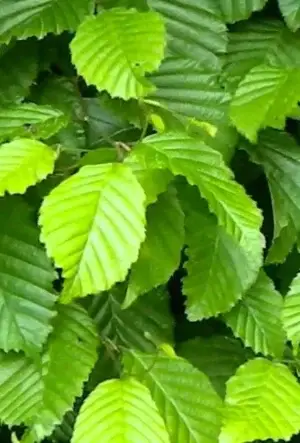
Hornbeam (Carpinus betulus) is a hardy deciduous hedge plant for dense traditional boundaries, particularly useful on heavier clay and in partial shade. Available as bare-root, pot-grown and instant hedging.
- Price From £7.95 Shop Now This product has multiple variants. The options may be chosen on the product page
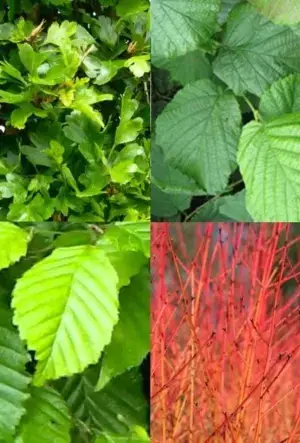
Horse Safe Hedging is perfect for planting as a border around paddocks with livestock in. We have used animal friendly hedging to ensure the safety of livestock, including horses and...
- Price From £139.95 Shop Now This product has multiple variants. The options may be chosen on the product page
CountryHedge is a species rich mixed native hedge supplied pre-clipped in metre long units. It containers Hawthorn, Blackthorn, Field Maple., Hazel, and other native species.
- Price From £19.95 Shop Now This product has multiple variants. The options may be chosen on the product page
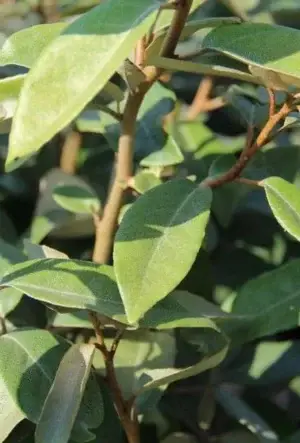
Oleaster Hedge is an attractive, variegated evergreen species with silvery green leaves that are silvery white underneath and has fragrant white flowers in the autumn.
- Price From £22.95 Shop Now This product has multiple variants. The options may be chosen on the product page
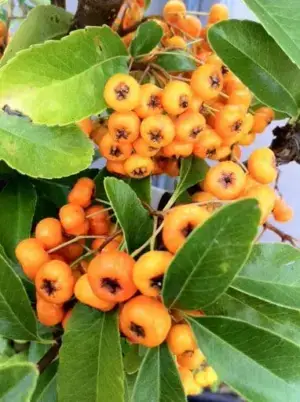
Orange Pyracantha is an extremely spiky evergreen hedging plant that produces fragrant white flowers in the spring followed by masses of shiny, bright orange berries.
- Price From £22.95 Shop Now This product has multiple variants. The options may be chosen on the product page
Red Pyracantha is an extremely spiky evergreen hedging plant that produces fragrant white flowers in the spring followed by masses of shiny, bright red berries.
- Price From £17.95 Shop Now This product has multiple variants. The options may be chosen on the product page
Upright Laurel is a dense, upright evergreen hedge with large glossy dark green foliage that is perfect for reducing road noise, providing privacy and screening.
- Price From £21.95 Shop Now This product has multiple variants. The options may be chosen on the product page
Western Red Cedar is a dense evergreen hedging plant that has aromatic, bright green foliage, perfect for screening.



How to Choose the Right Fast Growing Hedge
The best fast growing hedge is not always the plant with the highest possible annual growth. Your choice should also reflect the available space, soil conditions, final hedge height and the amount of pruning you are prepared to carry out.
Before ordering, consider:
- Whether you need year-round or seasonal screening
- The desired maintained height and width
- Sun, shade and exposure
- Soil type and drainage
- The available space for roots and branches
- How frequently the hedge can be trimmed
- Whether flowers, berries or wildlife value are important
- How the new hedge will be watered during establishment
Growth rates are guides rather than guarantees. Soil preparation, plant size, weather, watering, competition from grass and the timing of pruning will all influence how quickly a hedge develops.
Fast Growing Evergreen Hedges
Evergreen hedges retain their foliage throughout winter, making them popular for year-round screening and wind protection.
Green Leylandii is one of the fastest-growing evergreen options in the range. Its dense conifer foliage can form a tall privacy screen, but it needs regular trimming before it exceeds the required height or width. Avoid cutting deeply into old brown growth, as Leylandii may not regenerate from it.
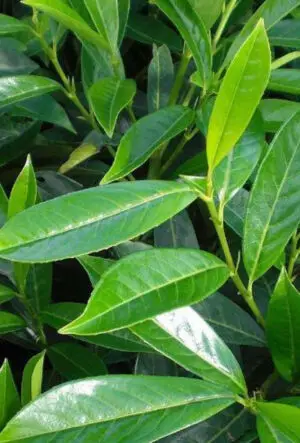
Cherry Laurel has large, glossy evergreen leaves and vigorous growth. It is particularly well suited to medium and larger gardens where there is enough space for a broad, substantial hedge.
Upright Laurel provides similar evergreen foliage with a narrower and more upright habit, making it useful where planting width is more restricted.
Western Red Cedar is another vigorous evergreen conifer suitable for screening and wind protection. It has a different foliage texture from Leylandii and should still be kept at the chosen size through regular maintenance.
Browse all our evergreen hedging plants or compare the complete Laurel hedging range.
For detailed planting, watering and pruning advice, read our Laurel Hedging Care Guide.
Privet for Fast Formal Hedging
Common Privet is a vigorous, semi-evergreen hedge plant that responds well to regular clipping. It can create a dense formal boundary and is available in several root types and starting sizes.
Privet may retain much of its foliage through a mild winter but can lose more leaves in cold or exposed conditions. It should not therefore be described as a guaranteed fully evergreen screen throughout the UK.
Golden Privet provides brighter variegated foliage, while Wild Privet offers a looser, more natural appearance.
Browse the full Privet hedging range or read our Privet Hedging Care Guide for advice on spacing, watering, feeding and pruning.
Fast Growing Deciduous and Native Hedges
Deciduous hedges lose their green foliage in winter, but they can provide flowers, berries, autumn colour and useful seasonal structure.
Hornbeam hedging is a strong choice for heavier soils and exposed positions. When regularly trimmed as a hedge, it often retains some dry copper-coloured foliage during winter, although it should not be sold as equivalent to a fully evergreen plant.
Read our Hornbeam Hedging Care Guide for detailed advice on establishing and maintaining Hornbeam.
Other quick-growing native and deciduous options include Hawthorn, Field Maple, Dog Rose, Hazel and Spindle. These plants can be useful for rural boundaries, wildlife planting and mixed native hedges where seasonal interest is more important than formal evergreen screening.
Browse our wildlife hedges or Native Mixed Hedge Plants for prepared mixtures and individual native choices.
Fast Growing Hedges for Different Purposes
Fast Growing Hedges for Privacy
Fast Growing Cherry Laurel, Upright Laurel, Common Privet, Leylandii and Western Red Cedar can all provide useful privacy screening.
The best choice will depend on how quickly coverage is needed, whether winter foliage is essential and how much space is available. A broad Laurel hedge may not suit a narrow boundary, while Leylandii requires dependable access for regular trimming.
Browse our dedicated Privacy Hedge Plants if screening is more important than growth rate alone.
Hedges for Windy and Exposed Sites
A fast growth rate is only useful when the chosen plant is suited to the site. Wind exposure, salt, wet soil and dry soil create different growing conditions and should not be treated as the same problem.
Hornbeam, Hawthorn, Western Red Cedar, Alder and some mixed native hedges can be useful in exposed positions. Coastal sites require plants capable of coping with salt-laden winds, while wet or waterlogged ground may favour Alder or other moisture-tolerant species.
Use the filters above and check each product description before choosing a hedge for a demanding site.
Fast Growing Wildlife Hedges
Hawthorn, Dog Rose, Blackthorn, Hazel, Pyracantha and mixed native hedging can provide flowers, fruit, berries or shelter for garden wildlife.
Fast growth alone does not make a hedge wildlife friendly. The greatest value often comes from a combination of suitable species, varied structure and management that allows some flowers and fruit to develop.
Browse our Wildlife Hedges or read the Native Mixed Hedging Care Guide.
Fast Growing Security Hedges
Thorny or densely branched plants can help form a more difficult boundary to pass through.
Pyracantha hedging, Hawthorn, Blackthorn and Dog Rose are among the options to consider where security and wildlife value are both important.
Thorny hedge plants should be positioned carefully beside pavements, entrances and areas used by children or pets.
Choosing a Starting Size and Root Type
Growth rate is only one factor in how quickly a new hedge provides coverage. The starting height, plant density and root type also affect the result.
Pot-Grown Fast Growing Hedges
Pot-grown hedging plants are supplied with established root systems in compost and can generally be planted throughout the year when the ground is workable.
They are available in a wide choice of species and sizes. Planting during warm or dry weather creates a greater watering commitment, particularly for larger plants.
Bare Root Fast Growing Hedging
Bare root hedging plants are supplied during the dormant planting season and are a practical option for longer hedge lines and larger quantities.
Common Privet, Hornbeam, Hawthorn, Field Maple and mixed native plants are among the quick-growing options commonly available bare root.
Smaller bare root plants will not create immediate screening, even when the species is fast growing. They need correct spacing, weed control and reliable watering while their roots establish.
Root-Balled Hedge Plants
Root-balled hedging provides larger, field-grown plants during the dormant season.
The additional starting height can offer a more established appearance than young bare root hedging. Root-balled plants are heavier and require thorough soil preparation and consistent establishment watering.
Instant Hedging
Instant hedging plants provide the quickest initial coverage because they are supplied as established sections of hedge.
This is different from choosing a small, fast-growing plant and waiting for it to develop. Instant hedging is useful where privacy or a finished appearance is needed from planting day, but it requires careful handling, prepared ground and dependable irrigation.
How to Plant Fast Growing Hedge Plants
Prepare the full planting line rather than digging small isolated holes into compacted ground. Remove grass and perennial weeds, loosen the surrounding soil and investigate drainage problems before planting.
Follow the plants-per-metre recommendation shown for the exact size and root type selected. Planting too widely may delay the formation of a continuous hedge, while overcrowding can restrict healthy development.
Apply RootGrow at Planting
Apply RootGrow Mycorrhizal Fungi according to the product instructions.
The granules need direct contact with the roots. For bare root hedging, use the supplied gel where instructed so the fungi remain in contact with the root system during planting.
Rootgrow can support establishment, but it does not replace correct planting depth, suitable soil or regular watering.
Improve the Soil with Hedge Planting Compost
Where the existing soil would benefit from more organic matter, mix Hedge Planting Compost with the excavated soil.
Use the compost as a soil conditioner rather than filling the entire planting trench with compost alone. Roots must be able to spread into the surrounding ground, so heavy compaction and drainage problems should be corrected across the planting area.
Watering and Hedge Irrigation
Newly planted fast growing hedges require consistent watering while their roots establish. A vigorous species cannot produce strong new growth if its root system repeatedly dries out.
Water slowly and thoroughly so moisture reaches the full root depth. Light rain may only wet the surface, especially where the soil is dry, compacted or sheltered by existing fences and walls.
For longer planting lines, Hedge Irrigation or Bronte Porous Pipe can help distribute water more evenly.
Check soil moisture rather than watering to a rigid timetable. Sandy soils may dry quickly, while heavier soils retain water for longer and should not remain waterlogged.
Rabbit Protection
Rabbits can damage young hedge plants by eating shoots and stripping bark, particularly on rural boundaries, field edges and commercial planting sites.
Where rabbits are present, fit suitable Hedging Spiral Guards when planting smaller single-stem plants. Support the guards with garden canes and inspect them regularly as the hedge develops.
Spiral guards may not suit large, bushy or multi-stemmed plants. Temporary rabbit fencing or another suitable protection system may be more practical in these situations.
Apply Hedge Feed After Planting
Once the hedge is planted and beginning to establish, apply Hedge Feed according to the product instructions.
Spread the feed over the soil around the root area rather than placing concentrated fertiliser directly against exposed roots or stems.
Feeding should complement correct planting and regular watering. It will not compensate for dry roots, poor drainage, deep planting or competition from grass and weeds.
Pruning Fast Growing Hedges
Fast-growing hedge plants are not necessarily low maintenance. Their rapid growth means they usually need regular pruning to remain at the required height, width and density.
Begin formative trimming while the plants are young. Light pruning encourages branching near the base and helps prevent a hedge becoming tall and thin.
The correct timing and pruning method will depend on the species:
- Laurel can be trimmed to control vigorous growth, although hand tools may give a cleaner finish on large leaves.
- Privet responds well to regular clipping during the growing season.
- Leylandii should be kept within bounds without cutting back into old brown wood.
- Hornbeam is usually trimmed later in the growing season if winter leaf retention is wanted.
- Flowering and berry-producing hedges should not be repeatedly trimmed before they have a chance to flower or fruit.
For broader guidance, read our guide to fast growing hedging for quick privacy.
Fast Growing Hedges FAQs
What Is the Fastest Growing Hedge?
Green Leylandii is one of the fastest-growing hedge plants in the range and is capable of producing substantial annual growth in suitable conditions.
Its speed comes with a greater maintenance commitment. Customers wanting something vigorous but easier to keep within a narrower space may prefer Upright Laurel, Privet or Western Red Cedar.
What Is the Best Fast Growing Evergreen Hedge?
Cherry Laurel, Leylandii, Western Red Cedar, Upright Laurel and Privet are all worth comparing.
Cherry Laurel provides broad evergreen foliage, Leylandii offers very rapid conifer growth, Western Red Cedar has softer conifer foliage, and Privet creates a more traditional clipped hedge but should normally be described as semi-evergreen.
What Is the Best Fast Growing Native Hedge?
Hawthorn is one of the most familiar fast-growing native hedge plants and can be used alone or as part of a mixed native hedge.
Hornbeam, Field Maple, Blackthorn, Dog Rose, Hazel and Alder are also useful options, depending on the soil, exposure and intended appearance.
How Can I Create Privacy More Quickly?
Choose a suitable fast-growing species, begin with a larger starting size and plant at the recommended density.
For the greatest coverage from planting day, consider root-balled or instant hedging rather than relying entirely on future growth.
Good soil preparation, consistent watering and formative trimming are just as important as choosing a vigorous species.
When Should I Plant a Fast Growing Hedge?
Pot-grown plants can generally be planted when the ground is workable and reliable watering is available.
Bare root and root-balled hedging are supplied during the dormant planting season. Avoid planting into frozen, waterlogged or extremely dry soil.
How Many Plants Do I Need?
The quantity depends on the species, supplied height and root type.
Use the recommended planting density shown beside the exact product option being ordered. Do not apply one general spacing figure to every fast-growing hedge.
Buy Fast Growing Hedges Direct from Our Nursery
Buy fast growing hedges directly from our established family-run nursery. We supply gardeners, landscapers, estates, developers, trade buyers and commercial customers with hedge plants for privacy, screening, wind protection and larger planting schemes across the UK.
Browse the products above to compare current sizes, root types and availability. Our nursery team can also help you choose a suitable species, calculate quantities and select the planting essentials needed to establish your new hedge.