
Hedging care & growing guide
Dog Rose Hedge Care Guide: Planting, Spacing & Pruning
Dog Rose is a hardy, fast-growing native hedge that establishes well in most free-draining UK soils when it is planted at the correct depth, watered carefully during establishment and allowed enough space for its naturally arching growth. This guide covers the practical care of Dog Rose hedging plants, including planting, spacing, watering, feeding and pruning.
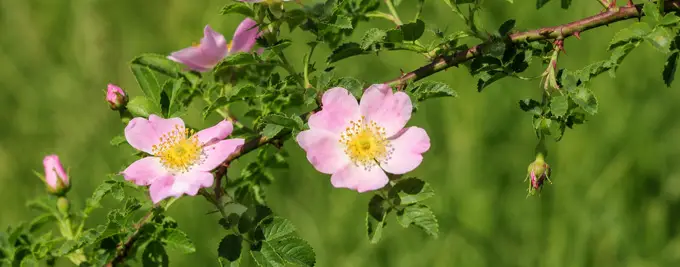
Rosa canina is deciduous and produces thorny, scrambling stems, pale pink to white flowers in early summer and red-orange hips later in the year. It is particularly useful for informal boundaries, wildlife hedges and mixed native planting, but its vigorous habit means it needs different management from a narrow formal hedge.
Below we also explain the differences between bare-root and pot-grown Dog Rose, how quickly a new hedge should establish, how pruning affects flowers and hips, and how to diagnose common problems such as yellowing leaves, poor growth, black spot and mildew.
Expert nursery advice
Gwynne's Grower's Tip
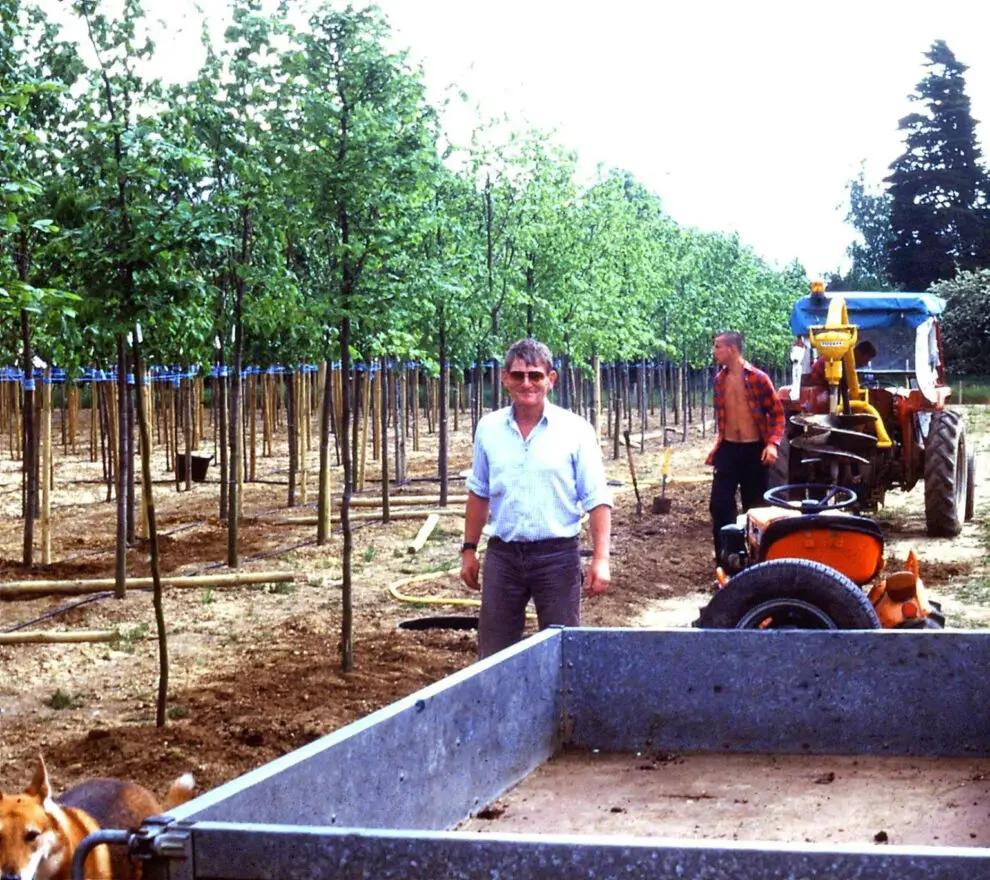
Dog Rose is naturally more relaxed and arching than a formal hedge such as Yew or Beech, so I would not try to force it into a very narrow shape. Give the plants room to branch from low down, keep weeds away from the base and concentrate on good watering while the roots establish. Once the hedge is growing strongly, prune selectively rather than taking the same amount off every stem. Leaving some older flowering wood also gives you a much better display of flowers and hips.
From our nursery
Visit our Dog Rose hedges

Dog Rose Hedge
Dog Rose is my choice where a customer wants a native hedge with a looser, more natural character rather than a tightly clipped formal boundary. The hooked prickles make it useful for a defensive hedge, while the flowers and hips add considerable wildlife interest. Bare-root plants are particularly practical for longer hedge runs, while pot-grown stock gives more flexibility over planting time.
Not sure which Dog Rose hedge to choose?
Compare the available plants, formats and starting sizes in the complete range.
Explore our complete Dog Rose hedging rangeDog Rose hedge quick-care summary
| Botanical name | Rosa canina |
|---|---|
| Plant type | Native thorny shrub / hedging rose |
| Evergreen or deciduous | Deciduous |
| Typical growth rate | Around 30–60cm a year once established |
| Preferred position | Full sun or partial shade |
| Soil | Most well-drained soils; avoid prolonged waterlogging |
| Watering | Water thoroughly during establishment and dry spells |
| Pruning period | Light shaping after flowering; selective renewal in dormancy |
| Feeding | Spring feed where soil or growth justifies it |
| Hardiness | RHS H7 |
| Typical hedge height | Commonly maintained at about 1.5–3m |
| Planting season | Bare root in dormancy; pot grown year-round in suitable weather |
| Root types commonly available | Bare root and pot grown |
About Dog Rose hedging
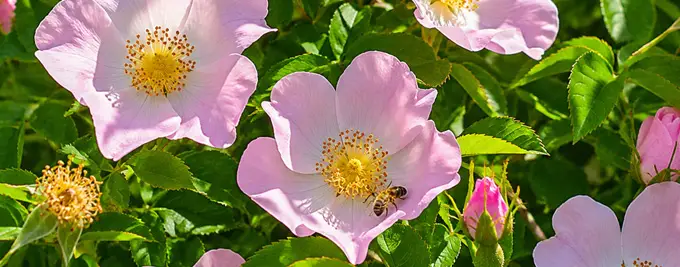
Dog Rose, Rosa canina, is a vigorous native deciduous shrub with long arching stems, hooked prickles, pale pink to white early-summer flowers and red-orange hips in autumn. It works particularly well as an informal wildlife hedge, defensive boundary or component of mixed native hedging.
Dog Rose is one of Britain's native wild roses and belongs to the Rosaceae family. In the wild it is commonly associated with hedgerows, scrub, woodland edges and rough boundaries, where its long flexible stems can scramble through neighbouring vegetation.
The plant produces compound green leaves along strong arching stems armed with hooked prickles. Fragrant single flowers are usually pale pink to white and open in early summer. These are followed by elongated red or orange-red rose hips that remain conspicuous into autumn if they are not removed by pruning or wildlife.
What does Dog Rose look like in a hedge?
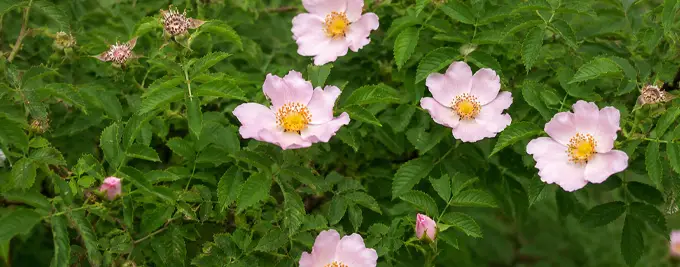
Dog Rose does not naturally form the flat, upright wall associated with tightly clipped evergreen hedging. Its habit is looser and more spreading, with new stems often arching outwards before becoming intertwined with neighbouring branches.
This makes it especially useful where a softer countryside character is wanted. The prickly stems can also help create a substantial physical barrier once the hedge is established.
Dog Rose in mixed native hedging
Dog Rose is also an excellent supplementary species in a mixed native hedge. Its flowers and hips extend the seasonal interest provided by species such as Hawthorn, Blackthorn, Hazel, Field Maple and Guelder Rose.
If you are planting several native species together, see our mixed native hedging care guide as well as this species-specific advice.
Current sizes, root types and availability can be checked on our Dog Rose Hedge product page.
Choosing the right Dog Rose hedge
Choose Dog Rose when you want an informal, deciduous and wildlife-rich boundary rather than a narrow evergreen screen. It is particularly useful for native planting, exposed sites and thorny boundaries, but its spreading habit and winter leaf loss make it less suitable where year-round privacy or a very formal shape is essential.
Dog Rose for privacy
Dog Rose forms a substantial network of prickly branches but it is deciduous. It therefore provides good physical structure and seasonal screening rather than the solid year-round foliage of an evergreen hedge.
For complete winter privacy, an evergreen species may be more appropriate. Dog Rose is better where seasonal character, wildlife value and a natural appearance matter more than maintaining a solid green screen throughout winter.
Formal or informal hedging?
Dog Rose is best suited to informal and semi-formal hedging. It can be trimmed, but frequent close clipping removes flowering wood and developing hips and also fights against the plant's naturally arching habit.
Small gardens and narrow boundaries
Allow sufficient width before planting. Dog Rose can be managed at a sensible hedge size, but a very narrow strip beside a doorway, path or vehicle access will require more frequent pruning and may expose people to the hooked prickles.
Sun and shade
Full sun normally produces the strongest flowering and hip display, although Dog Rose will tolerate partial shade and even a north-facing position where other conditions are suitable.
Exposed and coastal positions
Established Dog Rose is robust and is used successfully on exposed and coastal sites. Newly planted hedging still needs careful watering because wind can increase moisture loss before the root system has grown into the surrounding soil.
Wildlife boundaries
Dog Rose is particularly useful in wildlife planting because the flowers support visiting insects, the hips provide autumn food and the tangled thorny framework creates shelter and potential nesting habitat.
When to plant Dog Rose hedging
Bare-root Dog Rose is planted while dormant, normally from late autumn into early spring, while pot-grown plants can be planted at other times when the soil is workable and reliable watering is available. Avoid planting into frozen, waterlogged or exceptionally dry ground.
Bare-root Dog Rose
Bare-root plants should be planted during the dormant season. Hedging Plants Direct currently supplies bare-root Dog Rose as a seasonal product, with the main product information showing availability through the cooler months.
Plant as soon as practical after delivery. Until the roots are safely in the ground, keep them cool, shaded and moist because exposed fine roots can dry very quickly in wind or sunshine.
Pot-grown Dog Rose
Pot-grown plants offer more flexibility and can be planted throughout much of the year provided the ground is workable. Autumn and spring are generally easier because natural rainfall and cooler temperatures reduce establishment stress.
Summer planting is possible, but the original root ball can dry rapidly and may require considerably more monitoring.
Weather conditions to avoid
- Do not plant into frozen soil.
- Delay planting if the ground is saturated or waterlogged.
- Avoid planting during exceptional heat unless irrigation can be maintained.
- Protect bare roots from drying winds while the planting work is under way.
Where to plant Dog Rose
Dog Rose grows in full sun or partial shade and tolerates chalk, clay, loam and sandy soils provided prolonged waterlogging is avoided. Allow enough width for its arching stems and keep thorny growth clear of narrow paths, gateways and areas where regular close access is required.
Light
A sunny position generally produces the best flowering and fruiting, but Dog Rose also tolerates partial shade. It is considerably more adaptable than many ornamental roses.
Soil
Dog Rose can grow on chalk, clay, loam and sandy soils across a broad pH range. The key requirement is that the root zone should not remain persistently waterlogged.
Heavy clay does not automatically make the site unsuitable. Improve compaction and soil structure across a broad planting strip and make sure water can drain rather than collecting around the roots.
Exposure
Dog Rose is suitable for exposed conditions once established. On very windy sites, pay particular attention to firming, weed control and watering because wind increases moisture loss and can move poorly anchored plants.
Space around the hedge
Allow enough room to prune and inspect both sides. Keep the hedge far enough from paths and gates that hooked prickles will not continually catch clothing or obstruct access.
Before digging near buildings, drains, services or boundary structures, make sure the planting line gives both the roots and future hedge framework reasonable space.
Prepare the planting area
Prepare the whole planting strip rather than concentrating only on individual holes. Remove perennial weeds and grass, relieve compaction, correct drainage problems and improve poor soil with organic matter where necessary. Water dry pot-grown root balls before planting and keep bare roots protected from drying.
- Mark the hedge line. Use a string line where an even boundary is required.
- Remove grass and perennial weeds. A weed-free strip reduces competition for water during the establishment period.
- Check drainage. Do not simply fill a waterlogged trench with compost. Resolve the underlying compaction or drainage problem first.
- Loosen the soil. Break up compacted ground across a generous strip so new roots can grow beyond the planting hole.
- Improve poor soil where necessary. Mix Hedge Planting Compost or suitable organic matter with the existing soil rather than replacing the entire backfill with compost.
- Water dry pot-grown plants. The root ball should be evenly moist before it goes into the ground.
- Protect bare roots. Keep them covered, cool and damp until each plant is placed in the trench.
- Apply Rootgrow correctly if used. Rootgrow needs direct contact with the root system and should be applied according to its instructions.
- Avoid strong fertiliser in the planting hole. Correct depth, good soil structure and moisture management are more important than trying to force immediate top growth.
How to plant Dog Rose hedging
Plant Dog Rose at approximately the same depth it was previously growing, spread bare roots naturally or keep pot-grown root balls intact, backfill with improved existing soil and water thoroughly. Correct planting depth and firm root contact are more important than adding large quantities of fertiliser.
- Set out the plants first. Use the correct spacing for the exact size and root type being planted.
- Dig the trench or individual holes. Make them wide enough for roots to sit naturally without bending sharply upwards.
- Check planting depth. Position the previous nursery soil mark, or the top of a pot-grown root ball, approximately level with the finished soil surface.
- Prepare bare roots. Spread roots naturally and trim only genuinely damaged ends with clean secateurs.
- Prepare pot-grown roots. Remove the container and gently loosen obvious circling outer roots without destroying the root ball.
- Use Rootgrow if required. Apply it directly to the roots according to the product instructions.
- Backfill gradually. Work soil around the roots so large air pockets are eliminated.
- Firm gently. The plant should be stable, but the soil should not be compacted into a hard mass.
- Water thoroughly. Wet the complete original root zone and surrounding prepared soil.
- Apply mulch. Add an organic mulch such as Hedge Bio Mulch, leaving a gap around each stem.
- Protect young plants where necessary. Rabbits and deer can browse roses, so use suitable guards, netting or fencing where there is a known risk.
Planting bare-root Dog Rose
Bare roots are most vulnerable between unpacking and planting. Work in manageable batches so the roots are not lying exposed while the remainder of the hedge is being dug.
Planting pot-grown Dog Rose
During the first growing season, check the original root ball itself rather than assuming that wet surrounding soil means the centre of the potting compost is moist.
Dog Rose hedge spacing and plants per metre
Dog Rose spacing depends on the size and root type purchased. Current Hedging Plants Direct variation data ranges from six plants per metre for 40–60cm bare-root plants to three plants per metre for pot-grown stock, so do not use one generic spacing figure for every Dog Rose hedge.
The following figures are taken from the current Dog Rose product variations rather than from a generic hedge-spacing rule.
| Plant size and root type | Plants per metre | Approx. centre-to-centre spacing |
|---|---|---|
| Bare root 40–60cm | 6 per metre | About 17cm |
| Bare root 60–90cm | 5 per metre | 20cm |
| Bare root 90–120cm | 5 per metre | 20cm |
| Pot grown 40–60cm | 3 per metre | About 33cm |
| Pot grown 60–90cm | 3 per metre | About 33cm |
Why do the spacings differ?
Smaller bare-root whips are planted more closely because each individual plant has less initial branch framework. Larger and pot-grown plants already occupy more space and therefore need fewer plants to fill the same length.
Single versus double rows
A single-species Dog Rose hedge can normally be planted as one row using the current product density. Dog Rose can also form part of a broader staggered mixed native hedge, but the total density and row arrangement should follow the specification for that particular mix rather than simply doubling the Dog Rose figures above.
Watering and establishing Dog Rose
Water Dog Rose thoroughly immediately after planting and monitor root-zone moisture closely during its first growing seasons. Do not follow a fixed calendar regardless of conditions: sandy soils, wind and warm weather increase demand, while heavy soils retain moisture and can become waterlogged if irrigation is excessive.
Immediately after planting
Water slowly and thoroughly so moisture reaches all the roots and settles soil around them. A quick surface sprinkle is not enough.
During the first growing season
Check the soil at root depth regularly, particularly during dry, windy or warm weather. Water when the root zone is beginning to dry rather than applying a small amount every day regardless of conditions.
Long hedge runs can be easier to manage with a properly installed Hedge and Garden Irrigation system, but irrigation still needs checking. Test several points along the run and make sure the end of the line receives adequate water.
Bare-root establishment
A newly planted bare-root hedge may make relatively modest top growth during its first season while it produces new roots. This is not automatically a sign of failure.
Pot-grown establishment
The original compost root ball can behave differently from the surrounding soil. Check that water is reaching through the root ball instead of running around its outside edge.
Signs of drought
- wilting or soft new shoots
- dry soil below the surface
- premature yellowing or leaf drop
- weak extension growth
- dieback at shoot tips following prolonged stress
Signs of excessive moisture
- persistently saturated soil
- yellowing despite wet ground
- poor root growth
- weak or stalled shoots
- root decay in severe cases
Keep a weed-free strip around young plants. Grass can remove a surprising amount of moisture from exactly the same shallow soil occupied by newly developing hedge roots.
How and when to feed Dog Rose
Dog Rose is naturally adaptable and does not need heavy feeding in reasonable garden soil. Where growth is weak because the soil is genuinely low in nutrients, apply a balanced fertiliser around the root area in spring and combine this with mulch, weed control and correct watering rather than relying on fertiliser alone.
Does Dog Rose need feeding every year?
Not necessarily. A healthy established Dog Rose growing strongly in reasonably fertile soil may require little supplementary fertiliser.
Before feeding a weak hedge, check moisture, drainage, weed competition and planting depth. Fertiliser will not correct roots that are dry, waterlogged or badly planted.
Spring feeding
Where feeding is justified, apply a balanced general hedge or rose fertiliser over moist soil around the active root area in spring. Our Hedge Feed can be used according to the instructions on the product.
Keep concentrated granules away from exposed roots and stems and do not exceed the recommended rate.
Mulching
An organic mulch is often as valuable as fertiliser because it reduces moisture loss, suppresses competing weeds and gradually contributes organic matter as it breaks down.
Avoid forcing late growth
Do not apply excessive high-nitrogen feed late in the growing season simply to chase faster height. Soft late growth may not mature as well before winter and vigorous top growth is of little value if the root system is still establishing.
How and when to prune Dog Rose
Dog Rose flowers mainly on established wood, so the best pruning method depends on whether your priority is a tidy hedge, maximum flowers and hips, or renovation. Keep routine pruning light, remove damaged and congested growth selectively, and avoid shearing away all older flowering wood each year.
When should Dog Rose be pruned?
Dog Rose is a species shrub rose. For general shaping, light pruning after flowering is appropriate. Older stems can also be removed selectively to renew a mature plant.
If autumn hips are an important part of the hedge, avoid trimming off all flowered growth immediately after flowering because this removes developing fruit. In wildlife hedges, selective rather than wholesale cutting usually gives the best balance between control, flowers, hips and shelter.
How to prune a young Dog Rose hedge
The aim during establishment is to encourage a branched framework from low down. Remove damaged tips and shorten excessively long, poorly branched shoots where necessary, but do not automatically cut every well-branched plant to the same height.
How to prune an established hedge
- Remove dead, diseased, damaged and badly rubbing stems first.
- Thin some congested growth where the centre has become excessively tangled.
- Remove selected older stems near the base periodically to encourage replacement growth.
- Shorten shoots extending too far over paths, gates or neighbouring areas.
- Retain a proportion of older healthy growth for flowering.
Can an overgrown Dog Rose be cut back hard?
Dog Rose is vigorous and can respond strongly to renovation. Rather than reducing every stem severely at once, a mature wildlife hedge can often be renovated in stages, removing some older stems and allowing replacement shoots to develop before tackling another section.
Flowers versus a tightly clipped shape
The harder and more frequently the hedge is clipped, the fewer opportunities it has to flower and produce hips. Decide whether the main objective is ornamental/wildlife value or a tightly controlled boundary and prune accordingly.
Check for nesting birds
Inspect the hedge carefully before any pruning. Never damage or disturb an active wild bird nest. Agricultural hedges can also be subject to additional seasonal cutting restrictions.
Dog Rose growth rate and eventual size
Dog Rose is a vigorous hedge plant and the current Hedging Plants Direct product lists a typical growth rate of around 30–60cm a year. Growth varies with soil, moisture, light, establishment and pruning, and newly planted bare-root hedging may grow more slowly initially while its roots establish.
Under reasonable conditions, established Dog Rose can make substantial annual extension growth. Hedging Plants Direct currently lists the species at approximately 30–60cm per year, but this should be treated as a guide rather than a guarantee.
What affects the growth rate?
- soil structure and drainage
- availability of moisture
- sunlight
- competition from grass and weeds
- planting depth and root condition
- exposure to drying winds
- how heavily the hedge is pruned
How tall does Dog Rose grow?
Dog Rose is commonly maintained as an informal hedge at roughly 1.5–3m. If allowed to grow naturally, its arching stems can become considerably larger and may scramble through neighbouring shrubs.
The RHS records a mature size of approximately 2.5–4m high and 1.5–2.5m wide. The current Hedging Plants Direct product specification lists an overall potential height of up to 5m, illustrating how variable the species can be according to growing conditions and support from surrounding vegetation.
How quickly will a new hedge fill out?
Do not judge a bare-root hedge solely by first-season height. Root establishment comes first. Correct spacing, low branching, weed control and consistent moisture are more important to long-term density than forcing maximum extension growth immediately.
Seasonal Dog Rose care
Dog Rose is relatively straightforward once established, but the priorities change through the year. Winter is primarily for dormant planting and structural checks, spring for establishment and feeding where needed, summer for moisture and disease monitoring, and autumn for hips, mulch and preparation for the next bare-root planting season.
| Period | Main jobs | What to watch for |
|---|---|---|
| January–February | Plant bare root in workable ground; inspect guards; remove dead or damaged growth where necessary | Frozen soil, waterlogging, wind-rock |
| March–April | Finish dormant planting; mulch; feed established plants where justified; begin moisture checks | Drying winds, new weed growth, aphids |
| May–June | Maintain establishment watering; enjoy flowering; keep planting strip weed free | Aphids, mildew, black spot, active bird nests |
| July–August | Water during drought; light shaping after flowering only where required | Heat stress, mildew, black spot, nesting birds |
| September–October | Allow hips to develop; prepare new planting areas; check mulch and drainage | Premature leaf loss, rust, drought after dry summers |
| November–December | Plant bare-root stock when dormant; replace failures; mulch newly planted hedges | Root drying before planting, saturated soil, browsing damage |
Dog Rose pests, diseases and common problems
Most Dog Rose problems can be separated into establishment stress, moisture problems, browsing, insect feeding or common rose diseases. Check the roots and growing conditions before assuming every yellow or damaged leaf is disease, because drought, waterlogging and weed competition are frequent causes of poor young-hedge performance.
Yellow leaves
Yellow foliage does not have one cause. Check soil moisture first. A newly planted hedge may yellow after drought, prolonged saturation, root disturbance or heavy weed competition.
If yellow leaves also carry distinct purple-black spots, rose black spot is more likely. If there are orange pustules underneath the leaf, consider rose rust.
Black spots and early leaf fall
Rose black spot causes dark purple or black lesions followed by yellowing and premature leaf drop. Remove heavily affected fallen foliage where practical, improve air movement and avoid keeping foliage unnecessarily wet for long periods.
White powder on leaves and shoots
Rose powdery mildew produces white powdery fungal growth and may distort young foliage and buds. It is often worse where air movement is poor or roots are dry, so improve growing conditions as well as removing badly affected shoots.
Orange pustules beneath leaves
Rose rust produces orange, and later darker, spore pustules. Remove heavily infected material and keep the hedge vigorous without creating dense, soft growth through excessive feeding.
Sticky shoots and curled young leaves
Aphids commonly gather on tender rose shoots. Light populations on an established wildlife hedge are often tolerated and provide food for predators. Strong young plants generally recover without routine insecticide use.
Leaves rolled into tubes or eaten by larvae
Rose leaf-rolling sawfly and large rose sawfly can damage foliage. Confirm the pest before acting. A healthy mature hedge can tolerate a surprising amount of leaf feeding.
Dog Rose not growing after planting
Check the basics before adding fertiliser:
- Is the root zone dry?
- Is it permanently saturated?
- Was the plant set too deep?
- Are grass and weeds competing around the roots?
- Were bare roots allowed to dry before planting?
- Has the plant been browsed by rabbits or deer?
Sparse growth at the base
Where an older hedge has become leggy, remove selected old stems near ground level to stimulate replacement growth rather than repeatedly clipping only the top. Young hedges also benefit from formative management that encourages side branching instead of allowing a few stems to race upwards.
Brown or dead shoot tips
Individual dead tips may follow drought, physical damage, frost or dieback. Cut back to sound healthy tissue and then look for the underlying cause. Repeated dieback across several plants deserves closer investigation.
Rabbit and deer damage
Young Dog Rose can be browsed before its prickly framework becomes substantial. Where browsing pressure is known, install suitable protection at planting and inspect it regularly.
Is the plant dead or dormant?
Dog Rose is deciduous, so a bare-looking plant in winter is normal. In spring, scrape a very small patch of bark on a questionable stem. Green, moist tissue beneath the bark indicates that the stem is still alive. Brittle brown tissue throughout the plant may indicate failure.
Dog Rose wildlife and environmental value
Dog Rose contributes flowers, hips, shelter and dense thorny structure to a wildlife hedge. Its early-summer flowers are visited by insects, while the hips provide autumn food and the tangled framework offers cover for birds and other small animals. Management has a major effect on how much of this value is retained.
Flowers for insects
The open single flowers expose their pollen-bearing centres, making them readily accessible to visiting insects during early summer.
Autumn hips
The red-orange hips add seasonal colour and are used as food by birds and other wildlife. Repeatedly clipping the hedge immediately after flowering can greatly reduce the number that develop.
Nesting and shelter
The dense network of prickly stems provides useful shelter once the hedge has matured. Allowing the base to remain reasonably dense increases its value as cover.
Wildlife-friendly pruning
A hedge cut back to exactly the same dimensions every year produces fewer flowers and fruits than one managed more selectively. Where space permits, allow some growth to flower and fruit and consider rotating heavier pruning between sections.
Always check for active bird nests before cutting, regardless of the month.
Dog Rose care by root type
Hedging Plants Direct currently supplies Dog Rose as bare-root and pot-grown plants. Both can establish into the same mature hedge, but bare roots need careful protection from drying before planting, while pot-grown plants require particular attention to moisture inside their original compost root ball.
Bare-root Dog Rose
- Plant while dormant.
- Keep roots damp and shaded before planting.
- Spread roots naturally rather than forcing them into a narrow slit.
- Plant to the previous nursery soil mark.
- Water thoroughly after planting even when the surrounding soil appears moist.
- Expect some first-season energy to go into root establishment rather than maximum height.
Pot-grown Dog Rose
- Water the pot before planting if the compost is dry.
- Remove the container without pulling the plant by its stem.
- Loosen obvious circling outer roots gently.
- Set the top of the root ball level with the surrounding soil.
- Direct water into the original root ball during establishment.
- Plant during suitable weather and provide additional irrigation when planted in warm conditions.
The current Dog Rose range does not require root-ball or instant-hedging instructions because those formats are not presently listed for this product.
Frequently asked questions about Dog Rose hedging
How many Dog Rose plants do I need per metre?
The number depends on the size and root type. Hedging Plants Direct currently recommends six plants per metre for 40–60cm bare-root Dog Rose, five per metre for 60–90cm and 90–120cm bare root, and three per metre for current pot-grown sizes. Always check the selected product variation before ordering because planting densities can change.
How fast does a Dog Rose hedge grow?
Dog Rose can typically make around 30–60cm of growth a year once established in suitable conditions. Growth varies with soil, water, light, weed competition and pruning, and a newly planted bare-root hedge may make less visible top growth while its root system establishes.
When should I prune Dog Rose?
Keep routine Dog Rose pruning relatively light. Shaping can be carried out after flowering, while selected older stems can be removed periodically for renewal. If you want plenty of autumn hips, avoid cutting away all the flowered stems before the fruit develops and always check carefully for active bird nests before pruning.
Is Dog Rose evergreen?
No. Dog Rose is deciduous and loses its leaves in autumn. Its thorny branch framework remains through winter, so it still forms a physical boundary, but it does not provide the solid year-round foliage of an evergreen hedge.
How tall does Dog Rose grow?
Dog Rose is commonly maintained as a hedge at roughly 1.5–3m. The RHS records a natural mature height of approximately 2.5–4m, although vigorous stems can scramble higher through surrounding vegetation. Regular selective pruning keeps the hedge at a practical boundary height.
Can Dog Rose grow in shade?
Dog Rose tolerates partial shade and can grow on north-facing sites, although flowering and hip production are generally strongest where the hedge receives good light. Very dense shade beneath established trees may also create competition for moisture and reduce growth.
What soil is best for Dog Rose?
Dog Rose is adaptable and grows in chalk, clay, loam and sandy soils across a broad pH range. Aim for reasonably fertile soil that drains adequately. Heavy clay is not automatically unsuitable, but prolonged waterlogging and severe compaction should be corrected before planting.
Does Dog Rose need feeding?
Not always. Healthy Dog Rose growing strongly in reasonable soil may need little additional fertiliser. Where growth is weak because the soil is genuinely low in nutrients, apply a balanced feed in spring. Correct drought, waterlogging, weeds or poor planting before assuming fertiliser is the solution.
Why are my Dog Rose leaves turning yellow?
Start by checking the root zone. Drought, waterlogging and establishment stress can all cause yellowing. If the leaves also have dark purple-black spots, rose black spot is more likely; orange pustules underneath the leaves suggest rose rust. Diagnose the symptoms before applying any treatment.
Can Dog Rose be grown as a formal hedge?
Dog Rose can be clipped, but its natural habit is arching and informal. Frequent close trimming reduces flowers and hips and requires more work to keep the prickly shoots within a narrow shape. It is usually better suited to wildlife, native and countryside-style boundaries than highly formal hedging.
Is Dog Rose suitable for coastal gardens?
Yes. Dog Rose is a robust choice for exposed and coastal planting and Hedging Plants Direct lists it for these positions. Newly planted hedges still need careful watering because strong and salt-laden winds increase moisture loss before the roots are established.
What does a Dog Rose hedge look like in winter?
Dog Rose loses its leaves in autumn, leaving a network of arching, prickly brown stems through winter. Red hips may remain for part of the season if they have not been eaten by wildlife or removed during pruning, but the hedge should not be expected to provide evergreen winter screening.
Related hedge advice
Useful planting, pruning and hedge-care advice from our nursery.
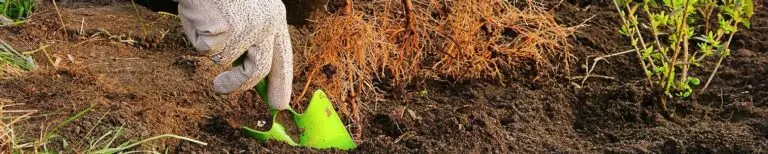
How to Plant a Hedge – Growing and Caring for Hedging Plants
Learn how you can easily plant a hedge with our comprehensive step-by-step guide. From picking the right species to planting techniques and after care.
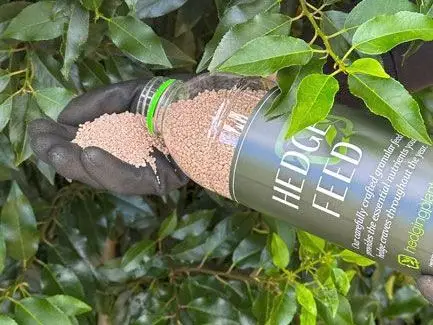
How to Fertilise a Hedge – Essential Tips for Healthy Growth
Enjoy healthy, lush hedges with our comprehensive guide on how to fertilise your hedge. Discover the importance of using the right types of hedge fertiliser
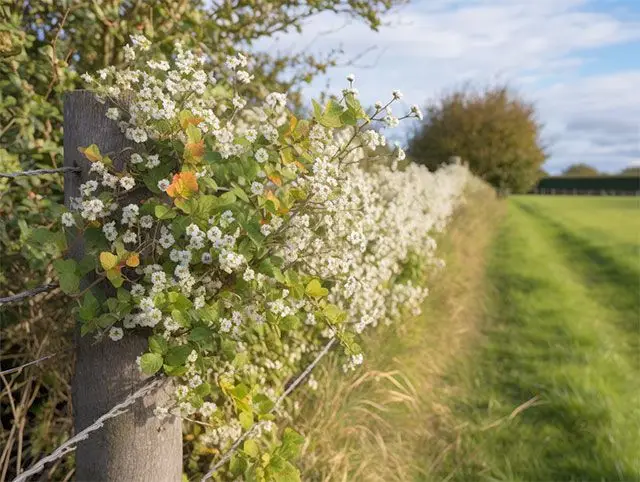
Native Hedge Plants UK: What to Choose for Your Garden
Compare native hedge plants for UK gardens and find the right species or prepared mixture for wildlife, screening, clay soil, shade and rural boundaries.