
Star Jasmine Plants
Browse our Star Jasmine plants, prized for their glossy evergreen foliage and clusters of highly fragrant white summer flowers. Also known as Trachelospermum jasminoides, this twining jasmine climber is well suited to warm, sheltered walls, fences, trellis, arches and pergolas. Buy directly from our established family-run nursery, supplying retail, trade and commercial customers throughout the UK.
 Price From £74.95 Shop Now This product has multiple variants. The options may be chosen on the product page
Star Jasmine, or Trachelospermum jasminoides, is a fragrant evergreen climber with glossy green foliage and clusters of white, star-shaped flowers during summer. It is ideal for training over sheltered walls,...
Buy Star Jasmine Plants Direct from the Nursery
Star Jasmine is an attractive woody climber that combines scented summer flowers with glossy foliage and useful vertical coverage. Choose from the Star Jasmine plants listed above, with the available pot sizes, plant heights, prices and delivery information shown on each product listing.
We supply homeowners, gardeners, landscapers, trade customers and commercial planting projects. For larger orders, contact our nursery team with the number of plants required, the planting position and the approximate area you want to cover.
You can also browse our wider ranges of pot grown plants, evergreen hedging plants and flowering hedge plants.
What Is Star Jasmine?
Star Jasmine is the common name for Trachelospermum jasminoides. Despite its name and jasmine-like fragrance, it belongs to the Trachelospermum genus rather than the true jasmine genus, Jasminum.
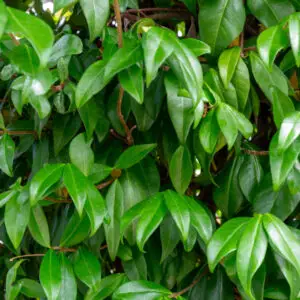
It is a woody, twining evergreen climber with glossy green leaves. The foliage may develop bronze or reddish tones during colder weather, particularly on plants growing in exposed or cooler positions. Clusters of white, star-shaped flowers are normally produced during summer once the plant is established and growing in suitable conditions.
Star Jasmine is generally evergreen in a warm, sheltered UK garden. Severe frost, cold winds or an exposed planting position may cause foliage damage or leaf loss, so it should not be presented as a guaranteed evergreen screen in every location.
Why Choose a Star Jasmine Plant?
Fragrant white summer flowers
The white, star-shaped flowers have a noticeable sweet fragrance. Planting near a seating area, doorway, terrace or regularly used path allows the summer scent to be appreciated.
A bright position normally encourages better flowering than heavy shade, although the plant should also be protected from cold and drying winds.
Glossy evergreen foliage
The dense, glossy leaves provide an attractive background for the summer flowers and can add useful structure outside the main flowering period.
During colder weather, some of the foliage may take on bronze or red tones. The amount of winter colour and foliage retention will vary with the plant, weather and growing position.
Useful vertical coverage
A Star Jasmine climber can be trained over:
- Garden trellis
- Horizontal support wires
- Fences with a suitable framework
- Sheltered walls
- Pergolas and arches
- Freestanding climbing frames
- Large containers with strong support
Star Jasmine is not self-clinging and will not attach itself securely to bare walls. Its young stems need to be tied and guided onto wires, trellis or another suitable support.
Can Star Jasmine Be Used as a Hedge?
Star Jasmine is a climber rather than a conventional freestanding hedge plant. However, it can be trained along a strong framework to form a leafy screen or narrow living boundary.
This can be useful where there is not enough space for a wide hedge or where you want to soften an existing fence or wall. The framework must be strong enough to support the plant as its woody stems develop.
The final density and speed of coverage will depend on the plant size, spacing, support, soil, weather, position and aftercare. Customers requiring an unsupported freestanding boundary should instead compare our complete range of hedging plants.
Where to Plant Star Jasmine in the UK
Star Jasmine performs best in a warm, sheltered position with full sun or light partial shade. South-facing and west-facing walls are often suitable because they provide warmth and protection, although the soil must still receive adequate moisture.
Choose a position with:
- Full sun or light partial shade
- Protection from cold and drying winds
- Moist but well-drained soil
- A strong climbing support
- Sufficient room for future growth
- Reliable access for watering and pruning
Avoid permanently waterlogged ground, exposed frost pockets and positions where the soil dries excessively beneath roof overhangs.
The ground beside a wall can be much drier than the surrounding garden because the wall and roof reduce the amount of rainfall reaching the soil. Check moisture around the root ball rather than judging conditions from the wider border.
Star Jasmine in colder locations
In colder or more exposed parts of the UK, choose the warmest and most protected position available. Young plants may benefit from temporary protection during severe frost.
Growing Star Jasmine in a large container may be an option where the plant needs to be moved or protected during winter. Container-grown plants need more frequent moisture checks because compost can dry quickly during warm or windy weather.
How to Plant Star Jasmine
Install the support first
Fit wires, trellis or another support before planting. This avoids disturbing the roots later and gives the new shoots somewhere to be tied as they develop.
Leave sufficient space between the support and the wall for air movement and access. Do not rely on the plant to grip smooth brickwork, timber panels or rendered surfaces without help.
Prepare the planting hole
Dig a hole wider than the root ball and loosen compacted soil around the sides and base. Remove the pot carefully and check the roots. Gently loosen tightly circling outer roots without breaking the root ball apart unnecessarily.
Position the plant at approximately the same depth at which it was growing in its container. Planting too deeply can bury the base of the stems, while planting too shallowly may leave the roots exposed.
For more general preparation advice, read our guide to planting a hedge.
Use Rootgrow at planting
Rootgrow mycorrhizal fungi can be applied when planting Star Jasmine in the ground.
Follow the application instructions supplied with the product and place Rootgrow in direct contact with the roots. Do not mix it generally throughout all the backfill soil, as direct root contact is required.
Rootgrow is applied at planting and does not replace suitable soil preparation, correct planting depth or regular watering.
Improve the soil with Hedge Planting Compost
Where the existing soil would benefit from improvement, mix Hedge Planting Compost with the excavated soil before backfilling.
Mix the compost with the existing soil rather than filling the complete planting hole with compost alone. The aim is to improve the planting area while encouraging the roots to grow into the surrounding ground.
Compost cannot correct a permanently waterlogged position. Resolve drainage problems before planting.
Backfill and water thoroughly
Backfill around the root ball with the prepared soil mixture and firm it gently to remove large air pockets. Avoid heavily compacting the soil.
Water thoroughly after planting to settle the soil around the roots. Check the plant again afterwards and straighten it if it has moved or sunk.
Watering and Irrigation
Newly planted Star Jasmine requires dependable watering while its roots establish in the surrounding ground.
Water deeply around the complete root area rather than applying a small amount to the soil surface. Check the moisture within the original root ball because potting compost can dry at a different rate from the surrounding garden soil.
The amount and frequency required will depend on:
- Weather and temperature
- Plant size
- Soil type and drainage
- Sun and wind exposure
- Time of year
- Whether the plant is in the ground or a container
Do not keep the roots permanently saturated. Yellowing leaves and poor growth can result from either insufficient water or waterlogged soil, so check below the surface before watering again.
A hedge irrigation system can make regular watering easier where several Star Jasmine plants are being trained along a long fence, wall or commercial frontage. Position the irrigation close to the root areas and check that every plant receives water evenly.
Do not assume the soil is wet simply because an irrigation timer has operated. Check the root zones regularly, particularly during warm, dry or windy weather.
Protecting Star Jasmine from Rabbits
Rabbit protection may be needed in rural gardens, open landscapes and commercial sites where grazing damage is known to occur.
Rabbits can damage young stems, bark and lower foliage. Depending on the plant size and form, protection may include an individual guard around a young stem or temporary rabbit fencing around the planting area.
Small spiral guards are not suitable for every Star Jasmine plant, particularly where several stems are already attached to a climbing frame. Choose protection that does not crush the stems, trap excessive moisture or interfere with training.
Browse our range of plant protection products and inspect all guards regularly. Adjust or remove them before they become restrictive.
Where deer, livestock or heavy grazing pressure is present, more substantial fencing may be required.
Feeding Star Jasmine After Planting
Hedge Feed can be used as part of the plant’s aftercare once the Star Jasmine has been planted.
Apply it to the soil around the root area according to the instructions on the packaging. Keep concentrated granules away from direct contact with the stems and exposed roots, and water the area after application.
Avoid applying more than the recommended amount. Extra fertiliser will not correct compacted soil, poor drainage, drought stress or an unsuitable planting position.
Plants growing permanently in containers may have different feeding requirements from plants growing in open ground. Use a feed suitable for container plants and follow its own application instructions.
Training and Pruning Star Jasmine
Tie young shoots loosely to the support as they grow. Use soft plant ties that do not cut into the stems and check them regularly as the plant develops.
Guide shoots across the available framework rather than allowing all growth to travel vertically. Spreading the stems over the support can help create more even coverage.
Pruning is normally carried out after flowering or when required to keep the plant within its available space. Remove dead, damaged or badly positioned growth and shorten excessively long shoots carefully.
Avoid severe pruning immediately before periods of frost. The precise timing should take account of the plant’s condition, local weather and the amount of growth that needs to be removed.
Star Jasmine for Retail, Trade and Commercial Customers
We supply Star Jasmine plants to domestic gardeners, landscapers, garden designers, trade customers and commercial planting projects.
For a larger installation, consider the complete length and height of the proposed screen, the strength of the support, access for irrigation and the amount of maintenance required. Contact our nursery team if you need help comparing plant sizes or estimating quantities.
Buying directly from our established family-run nursery also gives you access to practical advice on plant selection, planting and aftercare.